I spent three years photographing waterfront homes for a developer in Newport, and the single biggest mistake I saw—over and over—was that nobody seemed to understand what they were actually selling.
It wasn’t the granite countertops or the imported tile work or even the proximity to good schools. It was the water. The light bouncing off it at 6 PM in July. The way a dock stretches out like a punctuation mark at the end of a long week. The sound of rigging clanging against masts in the middle of a Tuesday afternoon when you’re supposed to be working but you’re staring out the window instead, wondering if you remembered to pay the electric bill. Anyway, most people stage these properties like they’re just regular houses that happen to be near water, which is sort of like saying the Mona Lisa is just a painting that happens to have a woman in it. They pile furniture in front of windows. They hang heavy curtains. They clutter sightlines with bookshelves and potted plants and those weirdly oversized vases that nobody actually uses but everyone seems to own three of. I’ve walked through open houses where the primary view—the thing worth an extra $800K, give or take—was completely blocked by a sectional sofa positioned to face a television instead.
The Geometry of Sightlines and Why Your Furniture Is Probably Ruining Everything
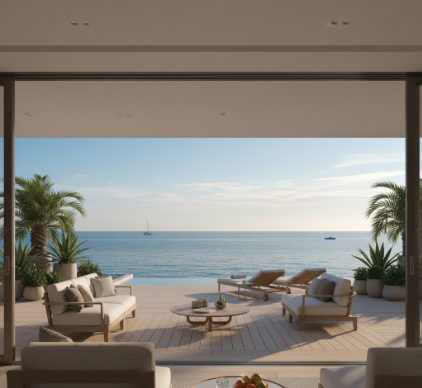
Here’s the thing: staging a waterfront property isn’t really about furniture at all. It’s about absence. Negative space. The stuff you deliberately don’t put somewhere. I used to think it was about creating cozy vignettes, those Instagram-ready moments with a throw blanket draped just so over a chair, but—wait—maybe that works for a city condo or a suburban colonial. For waterfront, you need to get out of the way. Remove anything that interrupts the path between a person’s eyes and the horizon line. This means low-profile furniture, and I mean genuinely low, not just regular height with shorter legs. It means no tall lamps near windows, no floor plants that reach above three feet, no breakfast bar stools that create a visual barrier between the kitchen and the water view.
Mirrors are tricky. Everyone thinks they should angle mirrors to reflect the view, doubling it, creating some kind of infinite water loop, but in practice this often just confuses people and makes them feel vaguely dizzy. I guess it works sometimes, depending on the angle of natural light and whether you’re dealing with morning sun or afternoon glare, but I’ve seen it go wrong more often than right.
Clear the decks—literally. That weathered teak table with six chairs? Maybe keep two chairs, max. People need to imagine themselves out there with coffee at sunrise, not hosting their daughter’s rehearsal dinner. String lights can stay if they’re subtle, but those big propane fire pits everyone bought during the pandemic need to go into storage. They block movement and, more importantly, they block sightlines when someone’s standing at the slider trying to gauge how much deck space they’re actually getting.
The Specific and Annoying Business of Light Management Throughout the Day
Light on water does weird things depending on time of day, and if you’re staging a property for showings, you need to either control the appointment times or control the window treatments, because midday glare will absolutely murder a showing.
I’ve been in waterfront homes at 1 PM in August where the reflected light off the bay was so intense you literally couldn’t keep your eyes open long enough to appreciate the view—it was like staring into a car’s high beams, just this white-hot sheet of pain. Solar shades help, the kind that reduce glare but don’t block the view entirely. Sheer linen works too, though it feels a little cottage-y for modern architecture. Some stagers use exterior shading, rolling awnings or pergolas with adjustable louvers, but that’s usually outside the scope of what you can change for a listing. Honestly, the easiest solution is to schedule showings for early morning or late afternoon, those magic hour windows when the light is warm and directional and doesn’t feel like a medical procedure. Golden hour isn’t just for photographers; it’s for real estate agents who want buyers to feel something other than retinal damage.
One more thing, and this might sound small but it matters: clean the windows. I mean really clean them, hire professionals with the squeegees and the weird extendable poles, because buyers will definately notice salt spray residue or water spots, and it breaks the fantasy. You’re not selling a house that requires maintenance. You’re selling a lifestyle that maintains itself, or at least seems to. Which is a lie, obviously—waterfront properties are endless work, the salt air corrodes everything, the humidity warps wood, the storms recieve your dock like a personal challenge—but that’s a problem for after closing.