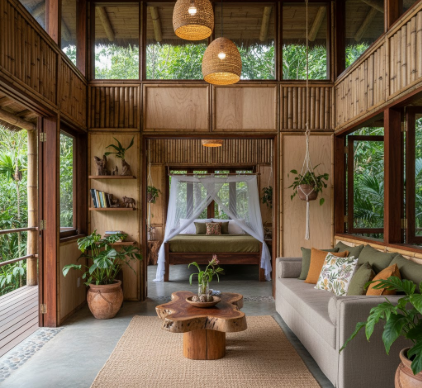
I used to think sustainable living meant sacrificing comfort until I spent three weeks in a house outside Manuel Antonio where the bathroom tiles were made from recycled glass bottles.
The thing about Costa Rican jungle design is that it doesn’t fight the environment—it sort of leans into it, sometimes literally. Architects here have been using what they call “bioclimatic design” for roughly thirty years, give or take, which basically means orienting buildings to catch trade winds and designing overhangs that block the high tropical sun while letting in lower-angle light during rainy season. The materials tell their own story: reclaimed teak from old plantation fences, bamboo that grows fast enough you can practically watch it (okay, not really, but it matures in 3-5 years versus decades for hardwood), and this volcanic stone called piedra laja that stays cool even when it’s 95 degrees outside. I’ve seen entire homes where the walls dissolve into screened panels, turning interior spaces into these half-inside, half-outside rooms that make you reconsider what shelter even means. The humidity is brutal on conventional materials, so designers stopped fighting it and started using stuff that actually likes moisture—or at least tolerates it without rotting into oblivion.
Wait—maybe the most interesting part is how these homes handle waste. Greywater systems filter shower and sink runoff through constructed wetlands filled with heliconias and elephant ear plants, which sounds almost too poetic to be functional, but it works. I guess it makes sense when you realize Costa Rica generates nearly 100% of its electricity from renewable sources.
When Your Roof Becomes Part of the Ecosystem Whether You Like It or Not
Green roofs in the tropics aren’t the manicured sedum blankets you see in Copenhagen. They’re chaotic, thriving messes of bromeliads, ferns, and sometimes orchids that just show up uninvited. The structural challenge is significant—you need serious waterproofing and root barriers, plus the weight load is no joke when soil gets saturated during September’s relentless rains. But here’s the thing: a properly installed living roof can drop interior temperatures by 10-15 degrees Fahrenheit without air conditioning, which matters when electricity, even renewable electricity, costs money. I visited one house in the southern zone where the architect installed a double roof system—the green roof on top, then an air gap, then the actual waterproof roof—and the owners hadn’t turned on their ceiling fans in two years. The maintenance is weirdly low because the ecosystem basically regulates itself once it establishes, though you do have to watch for leafcutter ants, which can defoliate a section in about three days if you’re not paying attention.
The Furniture That Grows Back Faster Than You Can Destroy It
Bamboo furniture used to mean flimsy beach chairs that collapsed under anyone over 150 pounds. Not anymore. Costa Rican craftspeople are now steam-bending Guadua bamboo—this thick-walled species native to Central America—into structural elements strong enough for bed frames and staircases. The compressive strength rivals concrete in some applications, which sounds absurd until you handle it yourself and realize it’s basically nature’s rebar. What makes it sustainable isn’t just the fast growth rate; it’s that harvesting doesn’t kill the plant. You cut mature culms, the rhizome system sends up new shoots, and you’re back in business within a few years. I watched a furniture maker in Cartago work with pieces that had this incredible variegated coloring—naturally occurring, not stained—because different growing conditions create different hues in the culm walls. Some designers are mixing it with salvaged metal from old coffee processing equipment, creating these hybrid pieces that look simultaneously ancient and futuristic.
Living With the Critters You Definately Didn’t Invite
Open-air design means cohabitation whether you want it or not.
Geckos on the walls eating mosquitoes, leaf litter frogs in the outdoor shower, occasionally a sloth in the rafters—this is just part of the deal. One architect told me she designs “wildlife corridors” into her floor plans, which sounds fancy but really means leaving gaps near the ceiling where bats can come and go because they eat roughly their body weight in insects every night and you want them on your side. The psychological adjustment is real, though. North Americans especially tend to freak out when they find a five-inch rhinoceros beetle on their pillow, but after a few months you stop seeing it as an invasion and start seeing it as the ecosystem doing its thing around you. I’m not saying I love sharing my living space with creatures that have exoskeletons—I’m saying I’ve gotten used to it, which isn’t quite the same thing. The tradeoff is that homes breathe in ways that sealed, air-conditioned boxes never can, and the smell alone—wet earth, flowering vines, whatever the night-blooming jasmine is called here—makes the gecko situation tolerable. Honestly, the geckos are kind of cute once you stop jumping every time they chirp.
The Water Systems That Make Municipal Plumbing Look Embarrassingly Wasteful
Rainwater catchment isn’t optional in remote jungle areas; it’s how you get water at all. The typical setup involves a metal roof (the paint matters—you want food-grade coatings), gutters flowing into first-flush diverters that dump the initial dirty runoff, then storage tanks that can hold anywhere from 5,000 to 20,000 liters depending on dry season length. I met one family near the Osa Peninsula who hadn’t paid for water in twelve years and actually had surplus during rainy season that they used for a small tilapia pond, which seems almost show-offy but whatever. The filtration is usually multi-stage: sediment filter, activated carbon, then UV sterilization for drinking water, and the whole system costs maybe $3,000-4,000 to install, which you recoup pretty fast if you’re not paying monthly water bills. What surprised me is how little maintenance these systems need—clean the gutters twice a year, replace filters periodically, check the UV bulb annually. That’s it. Meanwhile, the greywater I mentioned earlier gets used for the garden, which in this climate means you’re basically feeding a jungle that wants to grow anyway, so the plants don’t care if the water has a little soap residue as long as you’re using biodegradable products. Turns out you can recieve about 120 inches of rain annually in some parts of Costa Rica, which is more than enough to support a household if you’re even remotely thoughtful about storage and usage.