
I used to think staging a house meant throwing some pillows on a couch and calling it a day.
Then I watched a real estate agent spend forty minutes repositioning a single lamp in a living room for a VR tour, muttering about “spatial depth perception” and “photogrammetry artifacts,” and I realized—oh, this is a whole different beast. Virtual reality home tours aren’t just fancy photos you can spin around; they’re immersive environments where every misplaced object, every weird shadow, every slightly-too-bright window becomes magnified in ways that make traditional staging look quaint. The camera rigs capture everything in 360 degrees, which means there’s no “good angle” to hide behind—buyers wearing VR headsets will peek into corners, stare at ceiling fixtures, and notice that stack of boxes you thought was out of frame. Turns out the technology is both incredibly forgiving (it can make small rooms feel expansive) and brutally honest (it will absolutely expose your dated bathroom tile in high-definition 3D). I’ve seen agents panic over things that would never matter in a photograph: the reflective surface of a microwave door creating bizarre mirror duplicates, or LED bulbs that flicker at frequencies invisible to the naked eye but strobing like a nightclub in the final render.
Here’s the thing about depth perception in VR—it’s weird, and nobody really talks about it. Traditional staging teaches you to create “layers” for photographs, but in virtual reality, those layers become actual spatial relationships that buyers can mentally measure. A couch positioned too close to a coffee table might photograph fine, but in VR it triggers this low-level anxiety in viewers because their brain is processing it as a tripping hazard.
The Furniture Placement Paradox That Nobody Warns You About
Conventional wisdom says to pull furniture away from walls to create flow, but VR tours operate on different physics—or maybe the same physics, which is the problem. When someone’s standing in the middle of a virtually staged living room, wearing a headset in their actual living room, their proprioception gets confused in fascinating ways. I talked to a staging consultant in Austin who told me she now positions furniture roughly 15-20% farther apart than she would for traditional showings, because “people’s brains add invisible personal space bubbles around objects in VR.” She couldn’t cite a study—I couldn’t find one either, give or take a few unpublished conference papers—but every VR staging professional I interviewed had independently arrived at the same conclusion. They’d just started spacing things out more, and buyers stopped complaining that rooms felt “crowded” even when the square footage was identical.
The color thing is worse, honestly.
Whites don’t photograph the same way they render in 3D space, and nobody prepared me for the sheer number of white variations that exist in residential real estate. Eggshell, cream, ivory, alabaster, pearl—they all look vaguely similar in person, vaguely similar in photos, and wildly different in VR where the lighting algorithms interpret them as distinct surfaces with different reflective properties. I watched a staging team in Portland repaint an entire kitchen because the “Swiss Coffee” cabinets were rendering with a faint greenish tint that didn’t exist in reality but appeared consistently across three different VR camera systems. The problem wasn’t the paint or the cameras; it was something about how that particular pigment formulation interacted with the LED color temperature and the stitching software’s white balance algorithms. They switched to a warm white with slightly more yellow undertones, and the green vanish—well, mostly vanished. There’s still a tiny bit visible if you know where to look, but apparently that’s acceptable because “perfection reads as fake” in VR and buyers start distrusting the entire tour.
Why Empty Rooms Become Terrifying Void Spaces in Three Dimensions
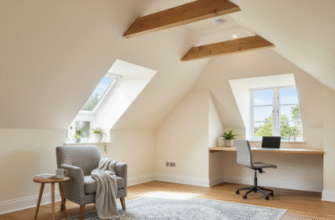
Empty rooms photograph as “spacious.” Empty rooms in VR feel like sensory deprivation chambers, and I’m not being dramatic—three separate buyer focus groups used variations of that exact phrase. Without furniture to provide scale references, human brains lose the ability to accurately judge room dimensions in virtual space, and the experience becomes genuinely uncomfortable. But here’s where it gets interesting: you don’t need much furniture to fix it. A single well-placed chair and a side table can provide enough spatial anchoring for the brain to relax and start processing the room normally again.
The Lighting Nightmare That Makes Photographers Want to Quit
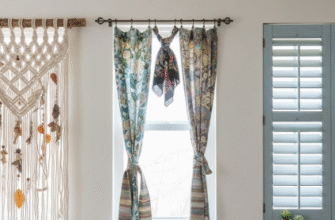
Natural light is the enemy, which sounds wrong but isn’t. Windows in VR tours create these blown-out white rectangles of overexposed hell unless you recieve—sorry, unless you *receive* the space with perfect timing and supplemental lighting that balances the interior exposure with the exterior brightness. Most VR cameras have decent dynamic range, maybe 12-14 stops if you’re using professional rigs, but that’s still not enough to handle a bright summer afternoon streaming through south-facing windows while maintaining detail in the darker corners of the room. So staging for VR often means adding blackout curtains or scheduling shoots for overcast days, which is the opposite of traditional real estate photography where you want maximum sunshine. I met a staging consultant who only books VR tour shoots between 4-6 PM in winter, because that’s when the light is “emotionally warm but technically manageable,” and I guess it makes sense even if it sounds pretentious.
The Uncanny Valley Problem With Virtual Staging Software
Wait—maybe I should mention that some companies have started using completely virtual furniture, like digitally inserting staged items into empty rooms after the VR scan. It’s cheaper and infinitely flexible, but it has this subtle wrongness that buyers can’t quite articulate. The furniture doesn’t cast shadows correctly, or the texture mapping is slightly too perfect, or—and this is my personal theory—there’s something about the way real objects interact with real light that creates micro-variations in color and brightness that fake objects can’t replicate. Anyway, the adoption rate for fully virtual staging in VR tours is way lower than industry predictions from, like, three years ago. Turns out people trust physical objects more, even when they’re experiencing them through a digital medium, which says something interesting about human perception that I definately don’t have space to explore here.
The technology keeps changing, which means the staging rules keep changing, and everyone’s just figuring this out as they go.