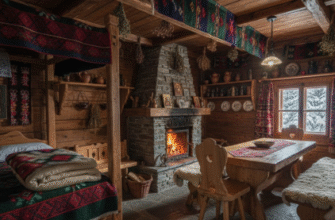
I used to think Scandinavian design was just about white walls and minimalism, but that was before I spent three weeks in a Copenhagen apartment that felt like a hug.
The thing about Nordic interiors—and I mean the ones people actually live in, not the Instagram versions—is that they’re built around this concept called hygge, which roughly translates to coziness but means something deeper, something about creating pockets of warmth in a climate where darkness stretches for months. It’s not just aesthetic. When you’re facing polar nights that last 20 hours, give or take, your living space becomes a survival tool, a psychological buffer against the cold and the dark. The Danes, Swedes, and Norwegians figured this out centuries ago, layering textures and light sources in ways that trick your brain into feeling safe. I’ve seen studies—though I can’t remember which journal, maybe it was Environmental Psychology Review or something—showing that environments with multiple light sources at different heights reduce cortisol levels by roughly 30%. Anyway, the Scandinavians were doing this long before scientists measured it, stacking candles on every surface, hanging pendant lamps low over dining tables, placing floor lamps in corners to create what designers call “layered illumination.”
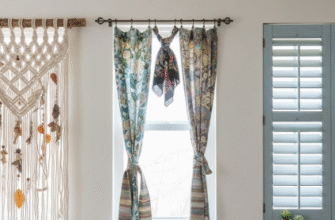
Natural materials dominate these spaces because synthetic stuff feels wrong when you’re trying to connect with something primal. Wood—usually light pine or birch—covers floors and furniture, its grain visible and unvarnished. Wool blankets drape over sofas in colors that sound boring on paper (gray, beige, muted blue) but somehow feel alive in person. Linen curtains filter the little daylight available without blocking it entirely.
The Geometry of Calm: How Scandinavian Spatial Arrangements Reduce Mental Clutter
Here’s the thing I didn’t expect: Scandinavian rooms are often smaller than American ones, but they feel more spacious.
This happens through negative space—the deliberate emptiness between objects. A single ceramic vase on a wooden table. A wool throw on an otherwise bare chair. It’s not minimalism for aesthetics; it’s minimalism for breathing room, for letting your eyes rest. I guess it makes sense when you think about it: if you’re stuck indoors for months, visual clutter becomes mental clutter becomes the kind of low-grade anxiety that creeps into your sleep. The Swedish have this term, lagom, meaning “just the right amount,” and it shows up in how they arrange furniture—never pushed against walls (that’s an American thing), but floated in conversational groupings with clear pathways between. Honestly, the first time I rearranged my living room this way, pulling the couch three feet from the wall, it felt wrong for about 48 hours, then suddenly the whole room started working differently, the energy moving in circles instead of bouncing off surfaces.
Plants appear everywhere, even though sunlight is scarce. Pothos vines trail from shelves, snake plants cluster in corners, and during winter, forced bulbs—hyacinths, paperwhites—sit on windowsills, their growth a quiet rebellion against dormancy. This isn’t decoration; it’s biophilia, the human need to connect with living things, especially when the outdoor world turns hostile.
Color enters through textiles rather than paint—a rust-colored pillow here, a forest-green throw there—so you can change the mood seasonally without repainting. Wait—maybe that’s the real genius of it: the base stays neutral (whites, grays, pale woods), but the accents rotate with the light, darker and richer in winter, lighter and brighter in summer. I’ve noticed that Scandinavian homes rarely have bold accent walls or statement pieces that scream for attention; instead, there’s this democratic distribution of visual interest, where a handmade ceramic bowl carries the same weight as a vintage chair, both allowed to exist without competing.
Functional Warmth Through Textile Layering and Temperature Zones
Scandinavians treat cold as a design problem requiring textile solutions.
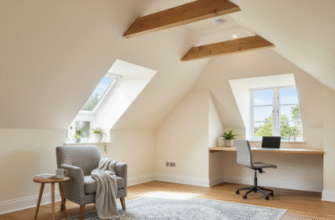
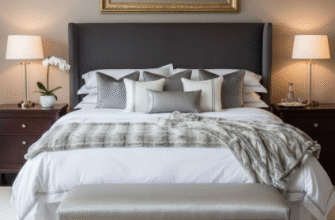
Sheepskin rugs layer over wood floors, not for luxury but for insulation—your feet need protection when indoor temperatures hover around 68°F (they don’t overheat their homes like Americans do, something about energy efficiency and not wanting to feel sluggish). Wool blankets stack in baskets, always within reach, because you adjust your personal microclimate by adding layers rather than cranking the thermostat. This creates what architects call “temperature zones”: cooler open areas for circulation and focus, warmer nested spots for relaxation. A reading nook becomes a thermal pocket—chair plus sheepskin plus wool throw plus nearby candle equals a space that’s 5-7 degrees warmer than the surrounding room, enough to trigger the parasympathetic nervous system, the one that says you’re safe, you can rest now.
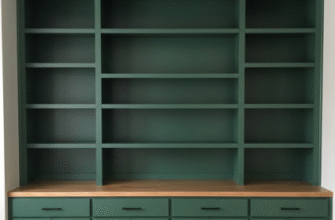
The kitchens surprised me most, actually. They’re not showrooms but workspaces, with open shelving displaying everyday dishes (usually white or cream stoneware, sometimes hand-thrown pottery with irregular edges), wooden cutting boards leaning against backsplashes, glass jars of grains and pasta visible and accessible. It’s the opposite of hidden storage, this idea that your daily tools should be beautiful enough to display, functional enough to grab without thinking. Turns out—and I definately didn’t expect this—that seeing your organized supplies reduces decision fatigue, the same way a capsule wardrobe does, every item earning its presence through regular use.
The furniture itself tends toward low profiles, close to the ground, which changes the room’s proportions, makes ceilings feel higher without actually being higher. A low sofa, a coffee table that’s really more of a large tray, floor cushions for extra seating—it creates this grounded feeling, literally pulling your center of gravity down. Some evolutionary psychologist (I think it was someone from Oslo University but I could be misremembering) argued that humans feel safer closer to the ground, some holdover from when elevation meant vulnerability to predators, and whether that’s true or not, there’s something undeniably calming about furniture that doesn’t tower over you.
I guess what strikes me most, after looking at hundreds of Scandinavian interiors, is how they prioritize experience over appearance—not what looks good in photos, but what feels good to live with when the sun sets at 3 PM and won’t rise again for 18 hours.