I used to think Polish interiors were all about heavy wooden furniture and cold stone walls.
Turns out, the reality of blending historic Polish architecture with modern comforts is way messier and more interesting than that simplistic view. Walk into any renovated kamienica in Kraków or Warsaw’s Śródmieście district and you’ll see what I mean—these 19th-century tenement buildings, with their soaring ceilings (often 3.5 to 4 meters high, give or take), ornate moldings, and original herringbone parquet floors, are being gutted and rebuilt with underfloor heating, smart home systems, and minimalist kitchens that would make a Scandinavian designer weep. The contrast shouldn’t work, but somehow it does. Maybe it’s the way afternoon light filters through those impossibly tall windows with their original wooden frames, now fitted with triple-glazed inserts that actually keep the Warsaw winter out. Or maybe it’s just that Poles have gotten really, really good at this balancing act over the past two decades, learning to preserve the soul of a space while making it livable for people who expect their shower to have decent water pressure and their living room to hit 22°C without bankrupting them on heating bills.
Here’s the thing: the bones of these buildings are spectacular. The problem is everything else. Most kamienice were built between 1850 and 1920, and they’ve survived wars, occupations, and decades of deferred maintenance.
When Original Architectural Details Meet Contemporary Living Systems
The technical challenges are absolutely wild, and I guess not everyone realizes how complicated this gets. You can’t just rip out walls in a building with load-bearing masonry that’s been settling for 150 years—structural engineers have to map every beam, every brick archway, every place where someone in 1947 patched a shell hole with whatever materials they could find. Meanwhile, you’re trying to thread modern HVAC ducts, electrical conduits, and plumbing through walls that were never designed for any of this. I’ve seen renovation projects where they had to hand-carry materials up narrow staircases because the original wooden steps couldn’t support heavy equipment, and the stairwell itself is a protected historical element that can’t be altered. The heating is probably the trickiest part—those old buildings leak heat like sieves, but you can’t always add exterior insulation without destroying the facade’s historical character. So designers get creative: they insulate from the inside where possible, install reversible heat pumps, use radiators that look period-appropriate but contain modern thermostatic valves. Sometimes they’ll hide contemporary climate control behind original ceramic tile stoves (piece) that haven’t actually burned coal since 1978 but remain because they’re listed architectural features.
Wait—maybe the real genius is in what they choose to keep versus what they let go.
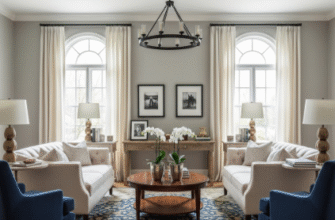
I’ve walked through dozens of these renovated spaces for research, and the pattern is pretty consistent: preserve the visible historic elements (moldings, floors, ceiling heights, window frames), gut everything else. Original doors get restored and rehung on modern hinges with proper seals. Those gorgeous stucco ceiling medallions get cleaned and repaired, then lit with recessed LEDs that didn’t exist when the building was constructed. The old double doors between rooms, which served as sound barriers and helped contain heat in the pre-central-heating era, get kept but fitted with modern hardware. And the color palettes have shifted dramatically—where previous generations might have used heavy reds and golds, contemporary Polish designers are going for whites, grays, and soft earth tones that let the architectural details breathe. It creates this weird temporal suspension where you’re simultaneously in 1890 and 2025.
The Emotional Geography of Living Inside Historical Layers
There’s something exhausting about maintaining these spaces, honestly. Every repair requires consultation with conservation officers if the building’s protected. Want to replace a window? Better match the original profiles and use traditional joinery techniques. Need to fix the roof? Those terracotta tiles are manufactured by maybe three suppliers in Poland who still make them the old way, and they cost roughly four times what modern roofing materials cost. But people keep doing it anyway, and I think it’s because these buildings carry memory in their walls—not in some mystical sense, but literally, in the layers of wallpaper and paint that restoration teams peel back, in the pencil marks on door frames tracking children’s heights from 1923, in the unexplained architectural quirks that only make sense when you learn the building’s history. Living in these spaces means accepting imperfection: floors that aren’t quite level, walls that aren’t quite plumb, door frames slightly trapezoidal from decades of settling.
Modern Polish design studios like Paradowski and MOOMOO have basically made careers out of this tension. They’ll pair a restored 1910 parquet floor with a floating concrete staircase. They’ll leave one wall of original brick exposed (carefully stabilized and sealed, naturally) while painting the others in flat white. They install invisible modern bathrooms behind period doors, complete with rainfall showers and heated towel racks, but they’ll source vintage porcelain fixtures or have replicas made. The result feels both honest and slightly dishonest—you’re living in a historical building, but you’re living comfortably, with wifi and air conditioning and maybe a wine fridge hidden in what used to be a coal chute.
I guess what strikes me most is how this approach has become definately Polish—not trying to recreate the past or completely erase it, but rather layering the present onto it in ways that acknowledge both.