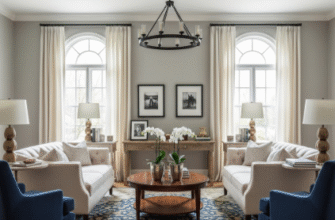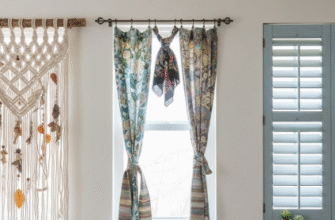
I used to think New England coastal homes were all about those stark white walls and nautical rope accents you see in every beachside Airbnb.
Turns out, the real classic seaside aesthetic—the kind you find in century-old captains’ houses from Maine to Connecticut—has always been messier, warmer, and honestly a lot more lived-in than that sterile maritime catalog look. We’re talking about homes that smell like salt and old wood, where the furniture has actual history instead of distressed finishes applied last Tuesday at a factory in North Carolina. The color palette isn’t just “coastal blue” from a paint chip—it’s the faded gray-green of driftwood that’s been tumbling in the surf for, I don’t know, maybe fifty years, the weathered brick red of lobster buoys, the deep navy of a working harbor at dusk. These homes absorbed centuries of nor’easters and summer humidity, and their interiors reflect that relationship with the ocean, not some designer’s fantasy of what beach life should look like. I’ve walked through enough of these places—some restored, some barely touched since 1890—to recognize that the best ones feel like they grew organically from their environment rather than being decorated according to a predetermined theme.
Here’s the thing: authentic New England coastal interiors layer textures the way sediment builds up on a tidal flat. You’ll find wide-plank pine floors worn smooth by generations of sandy feet, paired with sisal rugs that actually make sense because they can handle moisture and grit. The furniture tends toward solid, practical pieces—Windsor chairs, simple pine tables, maybe a captain’s chest that once held actual maritime equipment rather than decorative coral samples.
Wait—maybe I should back up and talk about why painted wood became such a signature element in these homes, because it’s not just aesthetic preference. In colonial and Federal-era New England, paint was expensive, so applying it signaled a certain level of prosperity, but it also served the practical purpose of protecting wood from the corrosive salt air. You’d see soft grays, muted blues, sage greens—pigments derived from natural materials available at the time, mixed with milk or oil bases. The slightly chalky, uneven finish you see in historic homes isn’t a design choice; it’s what happens when those old paints age over decades or centuries. Modern recreations that try to replicate this with one coat of flat latex miss the entire point—the beauty comes from layers, from slight color variations, from the way light hits an imperfect surface.
The Practical Architecture of Light and Salt Air Survival
New England coastal homes evolved specific architectural features to handle their environment, and these features shaped interior design in ways people don’t always connect. Large windows weren’t just about views—they maximized precious natural light during long winters and created cross-ventilation during humid summers. Interior shutters, which I used to think were purely decorative, actually served as storm protection and insulation. The result is rooms with strong bones: deep windowsills perfect for displaying sea glass collections or weathered ceramics, thick moldings that create shadow lines and visual weight, window seats built into dormers where you can actually sit and watch weather roll in across the water.
Anyway, this architectural context explains why the furniture scale tends toward substantial rather than delicate.
Objects That Carry Stories Instead of Just Filling Space Aesthetically
The most compelling New England coastal interiors I’ve encountered treat objects as accumulated narrative rather than curated vignettes. There’s usually a maritime painting or two—not necessarily valuable, just something that meant something to someone who lived there. Ship models, actual working navigation tools, weathered oars mounted on walls not as “decor” but because someone’s grandfather used them. Ceramic collections that might include historic salt-glaze stoneware alongside more recent pieces, all chosen for personal resonance rather than color coordination. I guess what separates this from the kind of themed coastal decorating you see in stores is intentionality and imperfection—these spaces tolerate visual contradictions, unexpected juxtapositions, things that don’t quite match.
The textiles follow similar logic: heavy linen curtains that can withstand salt air and strong sun, wool blankets in indigo or cream, maybe some antique quilts with traditional patterns like Ocean Waves or Mariner’s Compass. But you’ll also find contemporary functional pieces mixed in, because these homes were never museums—they adapted and absorbed new elements while maintaining their essential character. It’s messy in the best way.
Color Theory Derived from Actual New England Coastal Environments Over Time
If you actually spend time on the New England coast—and I mean beyond summer tourist season, into those raw November days when the light goes silver and brutal—you realize the color palette isn’t about pretty pastels. It’s about survival colors: the silvered gray of weathered shingles, the rust of oxidizing metal, the deep blue-black of mussels clinging to rocks, the cream and taupe of dried beach grass, the surprisingly bright white of surf against granite. These colors work in interiors because they reference the specific quality of coastal light in this region, which shifts dramatically with seasons and weather. A blue that looks perfect in June can feel completely wrong in February unless it has enough gray to absorb that cold winter light.
Traditional New England interiors often featured darker accent colors than people expect—deep reds, forest greens, even black—because these provided visual warmth and grounding against all that exterior gray and blue. The trick is proportion: lots of neutral, weathered tones punctuated by smaller doses of saturated color, usually in textiles or painted furniture details. You see this in historic homes where maybe one wall is painted a deep color while others remain in soft neutrals, or where a collection of blue-and-white ceramics provides the only strong color note in an otherwise subdued room.
Contemporary Adaptations That Respect Historical Authenticity Without Becoming Performative Period Rooms
The challenge with New England coastal style now is avoiding the Instagram version while still creating spaces that function for contemporary life. I’ve seen successful approaches that honor the vernacular tradition without trying to replicate it exactly—things like using reclaimed materials with actual history, choosing handmade ceramics and textiles from regional artists, incorporating modern comfort (good lighting, updated kitchens) in ways that don’t announce themselves aggressively. The key seems to be understanding the underlying principles: connection to place, accumulated rather than decorated spaces, respect for materials and craft, tolerance for imperfection and patina.
What definately doesn’t work is buying everything at once from one retailer’s “coastal collection,” because that eliminates the layered, time-accumulated quality that makes these spaces feel authentic. Better to start with good bones—if you’re lucky enough to have historic architectural details, work with them rather than against them—and add slowly, choosing pieces that resonate personally rather than checking boxes on a style list. Let things age naturally instead of buying pre-distressed finishes. Accept that some color combinations might feel slightly off or unexpected—that visual tension is part of what makes these interiors interesting rather than predictable.
Honestly, the best New England coastal homes I’ve experienced feel like they’re still evolving, still in conversation with their environment and their inhabitants, rather than frozen in some idealized historical moment or designed to photograph well from one specific angle.