I used to think modern farmhouse design was just shiplap and subway tile.
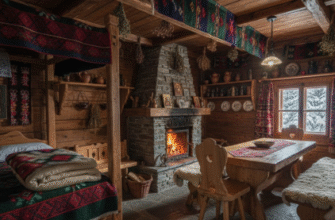
Turns out, the real magic happens in that weird, uncomfortable space between old and new—where a reclaimed barn beam meets a sleek quartz countertop, where your grandmother’s cast-iron skillet hangs above an induction cooktop, where everything feels slightly mismatched in a way that somehow works. I’ve seen it in dozens of homes now, this particular alchemy of eras, and here’s the thing: it’s not about following a formula. The best modern farmhouse interiors feel like accidents, like someone collected pieces across decades and continents and just… lived with them. They feature rough textures against smooth surfaces, antique furniture alongside minimalist fixtures, patina and polish coexisting without apology. The style emerged around 2010, popularized by designers like Joanna Gaines, but its roots stretch back to actual farmhouses—those pragmatic structures where families used what they had, fixed what broke, and added new pieces only when absolutely neccesary.
Walk into any authentic farmhouse from the 1800s and you’ll notice something. The walls aren’t perfectly straight.
Modern farmhouse design borrows this acceptance of imperfection while layering in contemporary comfort—because honestly, who wants to live without central heating or, you know, actual insulation? The approach typically starts with a neutral base: whites, creams, warm grays that echo whitewashed plaster or sun-bleached wood. Then comes the layering. You might pair a farmhouse sink (those deep, apron-front basins originally designed for washing vegetables and small children) with matte black faucets in a decidedly modern finish. Or maybe you install wide-plank oak flooring—but leave it unsealed in some areas, sealed with polyurethane in high-traffic zones. I guess it’s about honoring the past without being enslaved to it, creating spaces that feel collected rather than decorated. Wait—maybe that’s too philosophical. The practical reality involves a lot of hunting through salvage yards.
The Architectural Bones That Make Everything Else Work
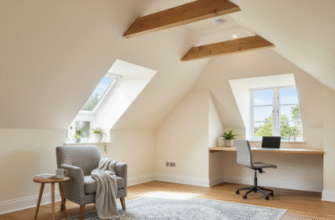
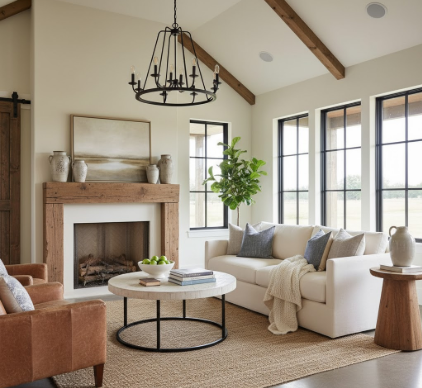
Exposed ceiling beams change a room’s entire personality. I’ve watched contractors install faux beams (usually lightweight polyurethane painted to look like aged wood) in homes built in 2023, and the transformation is undeniable—suddenly the space has history, or at least the suggestion of it. Authentic reclaimed beams cost anywhere from $15 to $35 per linear foot, depending on the wood species and condition, while faux versions run about $8 to $12. Shiplap walls, those horizontal planks with tiny gaps between them, originated as an inexpensive wall covering in actual barns and farmhouses. Now they’re everywhere, sometimes obnoxiously so, but when used sparingly—say, on a single accent wall or ceiling—they add texture without overwhelming the space. Large windows are non-negotiable in modern farmhouse design, preferably with black metal frames that reference old industrial factory windows. Natural light doesn’t just illuminate; it reveals, casting shadows that emphasize the texture of lime-washed brick or the grain in a live-edge dining table.
Furniture Choices That Refuse to Match Perfectly
The dining table should look like it survived something.
Maybe a century of family dinners, maybe just a convincing distressing technique applied last Tuesday—either way, it needs character. Pair that weathered farmhouse table with a mix of seating: two Windsor chairs, a bench with visible wood grain, maybe one upholstered chair that doesn’t quite match but picks up the cream tones from the walls. This is where modern farmhouse diverges from traditional interior design rules that insisted everything coordinate. Instead, you’re curating a collection that spans eras and styles but shares a common language of natural materials and understated elegance. I’ve seen people combine mid-century modern credenzas with Victorian-era armoires, and it works because both pieces respect craftsmanship and material integrity. Upholstery trends toward natural fibers—linen, cotton, maybe some worn leather—in neutral tones that won’t compete with architectural elements. The goal isn’t Instagram perfection; it’s livability with soul.
Lighting Fixtures as Sculptural Anchors Across Time Periods
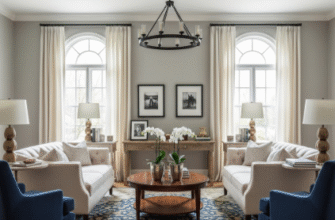
A wrought-iron chandelier doesn’t care about your minimalist pendant lights, but they can absolutely coexist. Modern farmhouse lighting is all about mixing industrial elements (think exposed Edison bulbs, metal cages, pulley systems) with more refined fixtures. You might hang a sleek linear LED fixture over the kitchen island while installing vintage-style sconces with glass shades in the dining room. Lantern-style pendants work particularly well, referencing old oil lamps while housing contemporary LED technology. Here’s what I’ve noticed: the best lighting plans in these spaces operate on multiple levels—ambient overhead fixtures, task lighting for work surfaces, accent lights that graze textured walls and highlight architectural details. Dimmer switches aren’t optional; they’re essential for creating that warm, lived-in glow that makes a modern farmhouse feel like an actual home rather than a stage set.
Material Contrasts That Create Visual Tension and Interest
Marble countertops on primitive pine cabinets. Sleek stainless steel appliances framed by rough-hewn shelving. This is where modern farmhouse gets interesting—or occasionally, where it fails spectacularly. The trick is balancing refinement with rusticity so neither element dominates. I used to think you needed a 50-50 split, but it’s more like 60-40 or even 70-30, depending on your personal tolerance for either polish or patina. Natural stone (limestone, soapstone, honed marble) bridges both aesthetics beautifully because it’s simultaneously elegant and elemental. Wood appears everywhere—ceiling beams, floors, furniture, cutting boards—but in varying states of finish, from raw and splintery to smooth and sealed. Metals range from aged brass and oil-rubbed bronze to matte black and brushed nickel, often within the same room. The goal is creating enough contrast to keep the eye moving without inducing visual chaos, though honestly, a little chaos keeps things from feeling too precious.
Textile Layers That Add Warmth Without Fussiness or Formality
Throw three different patterns on a bed and see what happens.
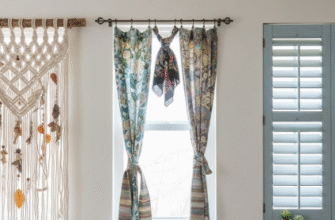
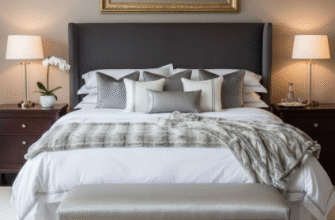
Maybe a linen duvet in oatmeal, a vintage quilt with faded florals, and some striped European pillow shams. Modern farmhouse textiles embrace imperfection—frayed edges, visible weave irregularities, slightly mismatched patterns that share a color palette. I guess it’s the opposite of hotel-crisp perfection, more like the accumulated comfort of a house that’s been lived in for generations. Windows might get simple cotton curtains, maybe some gauzy panels that filter light without blocking it entirely, or possibly just the bare window if the view is good enough. Rugs anchor spaces: a jute rug in the living room adds texture, a vintage Persian runner in the hallway injects unexpected color, a simple cotton dhurrie in the kitchen handles spills without drama. The common thread—if you’ll pardon the pun—is natural fibers and understated patterns that won’t compete with architectural elements or furniture. Nothing too matchy, nothing too deliberate, everything comfortable enough to actually use rather than preserve.