
I used to think Jamaican design was just about throwing red, yellow, and green everywhere until it looked like a Bob Marley poster exploded.
Turns out—and this took me embarrassingly long to figure out—the whole thing is way more nuanced than that, rooted in actual geography and cultural memory rather than just tourism branding. When you walk into a properly executed Jamaican-inspired interior, you’re not just seeing colors; you’re experiencing a specific kind of spatial logic that evolved in the Blue Mountains and Kingston’s older neighborhoods, where people figured out roughly a century ago how to make homes that didn’t turn into ovens by noon. The palette does include those reggae hues, obviously, but they’re deployed with surprising restraint—more like punctuation marks in a sentence written mostly in earth tones, weathered wood, and that particular shade of faded coral you see on colonial-era buildings that have been baking under equatorial sun for decades. It’s about creating spaces that breathe, that invite cross-ventilation and dappled light, that acknowledge the reality of living somewhere where the temperature doesn’t drop below 70°F even in January and where sudden rainstorms can turn your veranda into a swimming pool if you haven’t planned correctly. The aesthetic emerged from necessity, not from some designer’s mood board, though now of course it’s been packaged and sold back to us as “tropical chic” or whatever.
Here’s the thing: the colors themselves carry specific cultural weight that gets lost when you just slap them on a throw pillow. The green isn’t decorative—it references the island’s lush interior, the endless ferns and banana leaves and that almost aggressive fertility of Caribbean vegetation. Yellow nods to sunshine, sure, but also to the gold that never quite materialized for most Jamaicans despite centuries of colonial extraction. Red is the complicated one, tied to both African heritage and the blood shed during slavery and independence struggles.
Anyway, I guess what I’m saying is that authentic Jamaican interior design uses these colors sparingly, almost reluctantly.
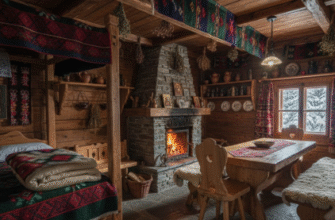
You’ll see them in a single accent wall, maybe, or in the traditional madras fabric on cushions, but the backbone of the room is usually natural materials—bamboo, rattan, mahogany if you can afford it, or just plain painted concrete if you can’t. I’ve seen homes in Montego Bay where the entire color scheme is essentially “sun-bleached everything” with one strategic burst of crimson in a piece of local art, and it works because the restraint makes that single pop of color actually mean something instead of just contributing to visual noise. The furniture tends to be low-slung and open, designed so air can move around and through it, because air conditioning was either unavailable or unaffordable for most of the island’s history. Wide verandas function as extra rooms, blurring the line between inside and outside in a way that would give most American homeowners anxiety about bugs and weather but makes perfect sense when your “outside” is perpetually pleasant and your “inside” needs all the help it can get staying cool.
Wait—maybe the most distinctive element is actually the louvers.
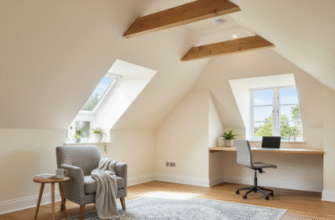
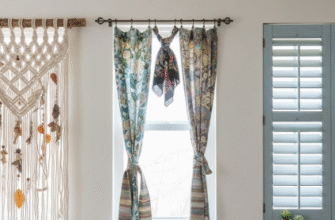
Those adjustable wooden slats you see on windows and doors throughout the Caribbean, they’re not just quaint tropical details but genuinely brilliant passive climate control technology that someone—I don’t know who, honestly, probably multiple someones across different islands—figured out before electricity became widespread. You can modulate light and airflow with remarkable precision just by angling them differently throughout the day, and they’ve become such an embedded part of Jamaican visual culture that even modern builds with actual air conditioning often include them purely for aesthetic continuity. The tropical ease everyone’s trying to capture when they create these spaces isn’t about being lazy or laid-back in some stereotypical island-time way; it’s about designing environments where you can actually function comfortably in serious heat and humidity without burning fossil fuels or bankrupting yourself. There’s a reason traditional Jamaican homes have high ceilings with exposed rafters, tile or concrete floors instead of carpet, and furniture that’s either woven or slatted rather than upholstered—every choice serves the practical purpose of staying cool while also creating a specific aesthetic that we now associate with relaxation and escape, though for people actually living there it’s just, you know, architecture that works.
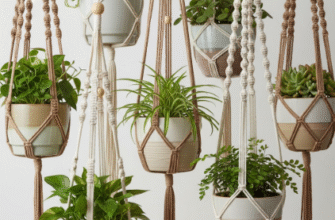
The tropical plants aren’t optional decoration either—they’re strategic.
Potted palms and snake plants and those massive elephant ear plants you see in every photo of “island-inspired” interiors, they actually help regulate indoor temperature and humidity while adding that crucial sense of bringing the outside in, which is the whole point when the outside is your primary asset. I’ve noticed that people who really understand this style never try to make it too precious or matchy-matchy; there’s an almost deliberate roughness to it, a willingness to let wood weather and fabrics fade and floors show wear, because fighting entropy in a tropical climate is a losing battle anyway. You might as well lean into the patina, let things age gracefully, accept that perfection is temporary and maintenance is constant. The colors will fade from jewel tones to something softer, the furniture will warp slightly despite your best efforts, and somehow that imperfection—that visible evidence of time passing and life being lived—becomes part of the aesthetic itself rather than something to frantically cover up or replace.
Honestly, trying to recreate this in a climate-controlled apartment in Minneapolis or wherever seems to miss the point entirely, but I guess we’re all trying to capture some feeling we had once on vacation, some memory of feeling physically comfortable and mentally unburdened, even if we have to fake the environmental conditions that originally produced that state.