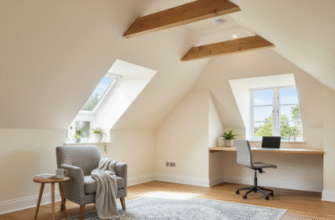
I’ve spent the better part of three years trying to convince architects that bedrooms don’t have to be caves.
The whole solarium-bedroom thing—where you essentially sleep under a retractable roof—started for me when I visited a friend’s place in Copenhagen back in 2019. She had this setup where her entire ceiling could slide open at the touch of a button, and I remember lying there at like 2 a.m., watching clouds drift past, thinking: why don’t more people do this? Turns out, the answer is complicated. Building codes in most U.S. states treat retractable roof systems as either “skylights” (which have one set of rules) or “operable structures” (which have entirely different rules), and nobody seems to agree on which category a bedroom roof should fall into. The permitting process alone can take six to eight months, depending on where you live. You’ll need structural engineers to sign off on load calculations, especially if you’re in snow country—those panels have to retract *and* support several hundred pounds per square foot when closed. Then there’s the issue of insulation: most retractable systems lose about 40% of their thermal efficiency compared to a standard roof, which means your heating bills will probably spike unless you install radiant floor heating or a supplemental system. I used to think you could just slap some weatherstripping on the edges and call it a day, but that’s not how physics works, apparently.
Here’s the thing: motor selection matters way more than anyone tells you upfront. Cheap rack-and-pinion drives will fail within three years if you live anywhere humid. You want IP65-rated motors at minimum, preferably IP67 if you’re near the coast, because salt air corrodes everything faster than you’d expect.
Picking Materials That Won’t Warp When You Actually Use the Damn Thing
Polycarbonate panels are what most people gravitate toward because they’re lightweight—roughly 200 times lighter than glass per square meter, give or take—and they don’t shatter into a thousand pieces if a branch falls on them. But polycarbonate yellows. Not immediately, but after maybe five years of UV exposure, you’ll notice this gross amber tint creeping in from the edges. Glass is heavier (you’ll need beefier motors and reinforced tracks), but it stays clear indefinitely. Laminated tempered glass is the standard now, same stuff they use in car windshields, which means if it *does* break, it’ll spiderweb instead of raining shards onto your bed. I guess that’s reassuring? The frame material is its own rabbit hole: aluminum is the default because it’s rust-resistant and relatively affordable, but it conducts heat like crazy, so you’ll get condensation problems unless you spec thermal breaks every 18 inches or so. Steel frames hold up better under heavy snow loads—we’re talking 50 pounds per square foot or more in places like Vermont or Colorado—but they rust if the powder coating gets scratched, which it will, because life is entropy. Some high-end systems use carbon fiber composite frames, which are fantastic until you need to replace a component and realize the lead time is four months because only two manufacturers in Germany make the parts.
Anyway, the control system is where things get weirdly personal. Do you want a wall switch? A remote? An app that lets you open the roof from bed at 3 a.m. because you can’t sleep and the moon looks cool? Most systems now come with rain sensors that automatically close the roof if it starts drizzling, which sounds great until the sensor malfunctions and you wake up to a soaked mattress. This happened to a colleague of mine—twice. She eventually disabled the automation and just checks the weather forecast manually, which feels like admitting defeat but also makes sense.
The Stuff Nobody Warns You About Until You’re Already Committed
Light pollution is brutal if you live near a city. I used to romanticize the idea of falling asleep under stars, but in most urban or suburban areas, the sky is this washed-out grayish-orange from streetlights and commercial buildings. You’ll see maybe three stars on a good night. People in rural areas have it better, obviously, but then you’re dealing with bugs. Mosquitoes, moths, beetles—all of them are *very* interested in the warm glow of your bedroom lights once that roof is open. Screens help, but retractable screens add another $8,000 to $12,000 to the project cost, and they’re one more mechanical system that can break. Also, noise. If you live under a flight path or near a highway, an open roof turns your bedroom into an echo chamber. I’ve seen people install acoustic baffles around the perimeter, which helps a little, but you can’t fully escape the sound of trucks downshifting at 5 a.m.
Temperature swings are another thing. Even with the roof closed, solarium bedrooms tend to overheat during the day because glass and polycarbonate trap infrared radiation. You’ll want motorized shades or a secondary layer of fabric panels that deploy automatically when it hits, say, 78 degrees inside. Some folks install electrochromic glass—the kind that tints itself when voltage is applied—but that’s a $40,000 upgrade for a typical 12-by-14-foot bedroom, which is, honestly, hard to justify unless you’re already building a custom house and money isn’t a primary concern.
Maintenance is weekly, not yearly. Tracks accumulate dirt, leaves, and bird droppings, all of which will jam the mechanism if you don’t clean them regularly. You’ll also need to lubricate the moving parts every few months—most manufacturers reccommend a silicone-based spray, not WD-40, because petroleum products degrade the seals. And if you live somewhere with freeze-thaw cycles, you’ll probably need to manually cycle the roof once a week during winter just to keep the motors from seizing up. It’s not complicated, but it’s definately more upkeep than a normal ceiling.
I guess what I’m saying is: this isn’t a weekend DIY project. You’ll need an architect, a structural engineer, probably a specialized contractor who’s done this before. Budget at least $60,000 for a basic system, closer to $120,000 if you want the fancy German hardware and automated everything. But—wait—maybe that sounds discouraging? It’s not meant to be. I still think solarium bedrooms are incredible when they’re done right. Waking up to actual daylight instead of an alarm feels like a minor superpower. Just go in with your eyes open.