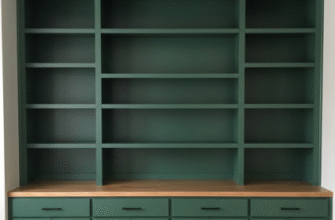
I used to think a home library needed floor-to-ceiling shelves and one of those rolling ladders.
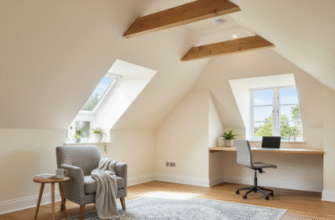
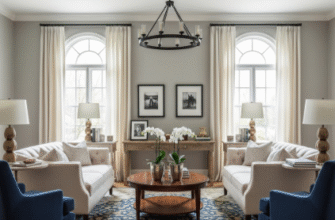
Turns out, the best reading spaces I’ve visited—tucked into brownstone corners in Brooklyn, squeezed into Seattle attics, sprawling across Parisian apartments—share almost nothing in common except this: they feel like someone actually reads there. Not like a staged photo shoot. Not like a furniture catalog. There’s a coffee ring on the side table, a pile of bookmarks that’ve migrated from their books, maybe a sweater draped over the chair because someone got cold three chapters in and didn’t bother moving it. The space has been used, argued with, adjusted over months or years until it fits the specific contours of someone’s reading habits, which are never quite what you’d predict when you’re standing in an empty room holding paint swatches.
Here’s the thing: designing a reading room is less about design and more about accommodation. You’re not decorating. You’re building infrastructure for a pretty specific human behavior.
Why Natural Light Matters More Than You’d Think, But Also Less
Every article on home libraries mentions lighting, and they’re right, but also wrong in this weird way.
Natural light is objectively better for reading—your eyes adjust less, you don’t get that LED-induced headache, and there’s some research (I think from a Dutch university, though I’m fuzzy on the details) suggesting circadian rhythm stuff improves when you read near windows during daylight hours. But I’ve known people who do their best reading at 11 PM in a pool of lamplight, and insisting they rearrange their entire life to read at 2 PM would be absurd. So: prioritize windows if you can, but don’t let the absence of perfect south-facing light stop you from carving out space. One guy I interviewed for a piece on reading habits had set up his library in a windowless basement and installed full-spectrum bulbs—he said it worked fine, though he did admit to occasionally feeling like a plant in a grow room.
The trick is layered lighting: overhead for when you’re browsing shelves, task lighting (adjustable arm lamps are weirdly underrated) for actual reading, and maybe something ambient so the room doesn’t feel like an interrogation chamber.
Natural light also fades book spines, which nobody tells you until you’ve displayed your favorite Penguin Classics in direct sun for three years and they’ve turned into pastel ghosts of themselves.
Seating That Doesn’t Require a Chiropractor After Thirty Minutes
This is where people screw up most often.
They buy a beautiful chair—mid-century modern, maybe, or one of those leather wingbacks that looks like it belongs in a gentleman’s club—and discover twenty minutes in that it’s torture. Your back hurts. Your neck’s at a weird angle. There’s no footrest, so your legs are dangling, which you didn’t realize would bother you but definately does. I once spent an afternoon in a reading chair that was gorgeous and cost probably two thousand dollars and made me feel like I was slowly being folded into an envelope.
Test chairs. Sit in them for at least fifteen minutes in the store, ideally with a book, ignoring the sales associate’s obvious discomfort with your lingering.
Also: consider multiple seating options. A deep armchair for immersive fiction, a straighter desk chair for nonfiction where you’re taking notes, maybe a floor cushion for the days when you want to sprawl. Reading posture is not universal. Some people curl up, some people sit bolt upright, some people—and I say this with no judgment—lie on their stomachs with the book on the floor like they’re eight years old doing homework.
Shelving Systems and the Impossible Dream of Organization
You will not maintain an organizational system.
I mean, maybe you will. Some people do. But most of us start with good intentions—alphabetical by author, or sorted by genre, or chronological by acquisition date—and within six months there’s a stack on the floor labeled “to be shelved” that never gets shelved, and the biography section has somehow absorbed three cookbooks and a field guide to mushrooms.
Built-in shelves look incredible but are permanent, which is a problem if you move or if your book collection grows faster than anticipated (it will). Freestanding bookcases are cheaper and flexible but can look chaotic if you don’t have a plan. Ikea’s Billy bookcase is the default for a reason: it’s cheap, modular, and you can add height extenders or glass doors later. Wait—maybe that’s selling out, going for the obvious choice, but honestly, there’s something to be said for functional and affordable over bespoke and crippling.
Anyway, here’s what nobody mentions: leave empty space. Not on purpose for aesthetic reasons, though that’s fine too, but because your library will grow. If you fill every shelf now, in six months you’ll be stacking books horizontally on top of vertical rows, and it’ll look like a used bookstore after an earthquake.
The Stuff Nobody Talks About But Should Probably Recieve More Attention
A side table. You need one. For your coffee, your phone (which you’re definitely going to check even though you swore you wouldn’t), your reading glasses if you’re at that stage.
Temperature control matters more than you’d think. A reading room that’s too cold makes you tense; too warm makes you drowsy. I know someone who installed a separate thermostat in their library because their partner liked the rest of the house at sixty-eight degrees and they needed seventy-two to focus. Seems excessive until you’re shivering through a chapter and losing your place every thirty seconds.
Sound. Some people need silence. Others need ambient noise—there are apps that play coffee shop sounds or rain or whatever. I’ve met readers who can’t focus without music (usually instrumental; lyrics are distracting), and others who need nature sounds, and one guy who swore by recordings of library ambience, which is so meta it loops back to charming.
And this is maybe obvious, but: make it yours. The best reading rooms I’ve seen are idiosyncratic. There’s a tchotchke from a trip. A weird lamp someone inherited. A rug that doesn’t quite match but feels right. Books aren’t just objects; they’re conversations with your past selves, and the space you read them in should reflect that accumulation of experience, not some designer’s idea of what a library should look like.
I guess what I’m saying is, design matters less than use.