I used to think tropical wood was just tropical wood, you know?
Then I spent three weeks in Honduras, staying in a house outside La Ceiba where every surface seemed to radiate this particular kind of warmth—not temperature exactly, but something deeper. The owner, a woman named Marta who’d inherited the place from her grandmother, explained that the dining table was granadillo, the beams were Santa Maria, and the shutters were carved from mahogany her grandfather had milled in the 1950s. Each wood had a story, a weight, a reason for being exactly where it was. Honduran interior design isn’t really about trends or Pinterest boards—it’s about understanding that ceiba trees can live for roughly 400 years, give or take, and that when you bring their wood into your home you’re carrying forward something that predates your great-grandparents. The Caribbean influence adds another layer: colors that shouldn’t work together (turquoise against deep orange, lime green beside fuchsia) somehow do, because the ocean teaches you that nature doesn’t do safe combinations.
The Woods That Built Coastal Honduras and Why They Still Matter Today
Mahogany gets all the press, obviously. But here’s the thing: most Honduran homes along the Caribbean coast use a mix of harder-to-pronounce species that matter just as much. Guanacaste, with its pale grain and resistance to humidity. Laurel, which doesn’t warp even when the air feels like you’re breathing through a wet towel. Rosewood—actually not one species but several—that ages into shades between burgundy and chocolate depending on how much sunlight hits it over decades.
Marta’s house had this reading nook built entirely from reclaimed dock wood, probably pine or cypres, weathered gray and smelling faintly of salt even years after it stopped touching water. She told me her uncle salvaged it from Puerto Cortés in the 1980s after a hurricane took out half the port infrastructure. I guess it makes sense that a culture shaped by storms would see beauty in salvage, in taking what’s broken and making it structural again. The Caribbean doesn’t allow for precious attitudes about perfection. You work with what the sea gives back.
Caribbean Color Theory According to Grandmothers Who Definately Know Better
Wait—maybe I should clarify.
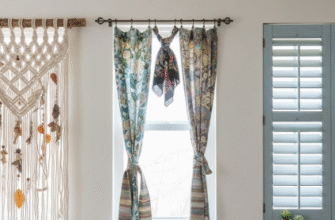
When I say Caribbean influences, I don’t mean the resort version with all-white furniture and token turquoise accents. I mean the actual aesthetic that emerges when African, indigenous Garifuna, and Spanish colonial sensibilities collide over centuries. Bright yellows derived from turmeric and annatto. Deep indigos that used to come from añil plants. Reds from achiote seeds. These weren’t decorative choices initially—they were available pigments, things you could grow or trade for. But over time they became a visual language. Marta’s kitchen had walls painted a shade of mango-orange that would make a minimalist weep, but against the dark Santa Maria cabinets it felt grounded, almost inevitable. Her daughter had added pale blue shutters, which shouldn’t have worked but did, because the ocean’s right there teaching you that clashing is just another word for layering.
How Humidity and Hurricanes Shape Every Design Decision You Make
Honestly, you can’t understand Honduran coastal interiors without understanding that mold is a constant low-level adversary. Wood selection isn’t aesthetic—it’s tactical. Teak and laurel have natural oils that resist rot. Stone floors aren’t just cooler; they don’t buckle when floodwater inevitably finds its way inside during storm season. High ceilings and cross-ventilation aren’t architectural flourishes; they’re survival strategies in a climate where air conditioning is expensive and power outages are routine.
Turns out, this creates a certain kind of beauty by accident. Or maybe not accident—maybe necessity and beauty aren’t as separate as design magazines pretend. I’ve seen homes where every window opens wide, where furniture sits on legs instead of flush to the floor (easier to clean underneath when sand blows in), where nothing precious lives below three feet because flooding is a when not if situation. There’s something deeply honest about spaces designed with disaster in mind. Nothing’s trying too hard. Everything earns its place by being useful first.
The Garifuna Contribution That Interior Design Magazines Keep Missing Completely
The Garifuna people—descendants of African, Carib, and Arawak peoples—have lived along Honduras’s Caribbean coast since the late 1700s, and their aesthetic fingerprints are everywhere if you know what to look for.
Woven palm fronds used as room dividers. Drums repurposed as side tables. Shells and driftwood incorporated not as beach-house kitsch but as structural elements, textural contrasts against smooth mahogany. Marta had a room divider made from bundled bamboo and fishing net that her neighbor, a Garifuna artist named Ruben, had constructed. It filtered light without blocking air flow, and when breeze moved through it the whole thing whispered. I used to think that kind of thing only worked in magazine shoots, but it had been there for six years, still functional, still beautiful. The Garifuna tradition emphasizes adaptability—you use what’s around you, you make it beautiful because why wouldn’t you, and you don’t overthink it. That philosophy seeps into Honduran coastal design whether people explicitly acknowledge it or not.
Anyway, I left Honduras with a different understanding of what interior design even means. It’s not about imposed style. It’s about responding to place—to heat, to storms, to the specific woods that grow in your specific mountains, to the colors your grandmother mixed because those were the pigments she had access to. It’s messy and personal and utterly tied to survival. Which maybe makes it more honest than anything you’d find in a showroom.