I used to think whitewashed walls were just about paint.
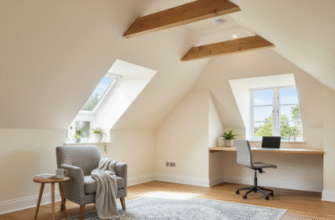
Turns out, the Greek island aesthetic—that bone-white, sun-bleached look you see in every Santorini Instagram post—has roots in something way more practical than design trends. Back in the day, islanders mixed limestone with water to create a natural disinfectant that doubled as wall coating, which made sense when you’re living in close quarters under a Mediterranean sun with questionable sanitation. The white reflects heat, keeps interiors cooler by maybe 10-15 degrees Fahrenheit (give or take), and the lime actually kills bacteria. So yeah, it’s beautiful, but it was also survival. I’ve seen modern designers try to replicate this with regular white paint and wonder why their spaces feel sterile instead of lived-in—here’s the thing: traditional limewash has texture, imperfections, layers that build up over years.
Anyway, if you’re trying to capture this vibe, you need more than a gallon of Behr Ultra Pure White. The Greeks weren’t aiming for perfection; they were working with what they had. Wooden beams weather naturally, stone floors develop patina, and nobody’s measuring whether the archway is exactly symmetrical.
Why Your Furniture Should Look Like It Survived a Shipwreck (But in a Good Way)
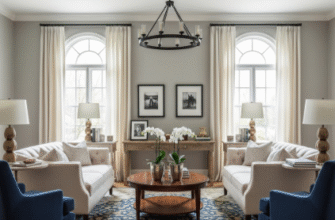
The furniture situation on these islands is weirdly minimal, and I think that’s where most people get it wrong when they try to recreate the style. You’ll see a wooden table that’s been sanded smooth by decades of use, maybe four chairs that don’t quite match, and that’s it for the dining area. No buffet, no credenza, definitely no decorative bowl filled with fake lemons. I guess it makes sense when you consider that historically, these homes were small—sometimes one or two rooms total—and every piece had to justify its existence. Modern interpretations tend to add too much: suddenly there’s a fiddle-leaf fig in the corner, some artisanal ceramics on floating shelves, a jute rug that cost $800. Wait—maybe I’m being harsh. Some of that works. But the original aesthetic came from scarcity, not curation.
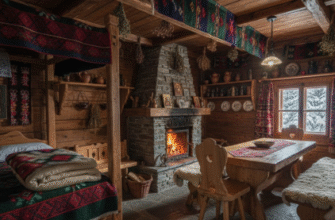
The wood itself matters more than you’d think. Island furniture was typically made from olive, cypress, or whatever driftwood washed ashore, and those materials age in specific ways—they crack, they fade to silvery gray, they develop this tactile quality that Ikea pine will never achieve. If you’re buying new pieces, look for reclaimed wood or at least something with visible grain and irregularities.
Natural Light as a Design Philosophy (Not Just a Real Estate Buzzword)
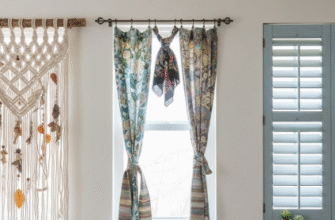
Here’s where the airy part comes in. Greek island homes were designed around light in ways that feel almost obsessive—small windows to keep out midday heat, but positioned to catch morning sun and evening breezes. Shutters painted in those faded blues and greens that everyone associates with Mykonos weren’t just decorative; they controlled light throughout the day, creating this constantly shifting interior atmosphere. I’ve noticed that when Americans try to copy this, they just install bigger windows and call it Mediterranean, which misses the entire point. The goal wasn’t maximum light; it was managed light, dappled and directional.
You can’t really fake this without understanding sun angles and seasonal changes, which sounds exhausting, honestly. But even small adjustments help: swap heavy curtains for linen panels, paint window frames white to bounce more light inward, remove unnecessary furniture that blocks pathways for natural illumination.
The Accidental Minimalism That Comes from Living on Rock in the Middle of the Sea
Everything about this aesthetic traces back to geography and economics—these islands are literally chunks of rock with limited resources, so excess wasn’t an option. Clay pots for storage because there weren’t closets. Woven baskets because plastic hadn’t been invented. Bare floors because rugs were expensive and impractical when sand blows through your door daily. What we now call minimalism was just life. Contemporary designers miss this when they try to recreate the look in a Denver suburb; they’re applying an aesthetic without the constraints that created it, and somehow you can tell. The space feels staged instead of inhabited.
I guess what I’m saying is—and maybe I’m contradicting myself here after spending 500 words analyzing this—you can’t really design your way into this style. You live your way into it. You let things fade and chip and accumulate dust in the corners. You stop trying to make everything match and just use what works. That whitewashed aesthetic everyone wants? It’s the result of decades of maintenance, compromise, and making do with what the sea and sun haven’t already destroyed. Which is maybe not the satisfying answer if you’re trying to redecorate this weekend, but there it is.