I used to think wall-mounted desks were just glorified shelves with pretensions.
Then I moved into a 320-square-foot studio in Brooklyn—one of those charming prewar boxes where “cozy” is real estate code for “you can touch three walls simultaneously”—and suddenly the whole concept made a lot more sense. Here’s the thing: when you’re working with roughly 15 square feet of usable floor space, give or take, every piece of furniture becomes a negotiation with physics and sanity. A traditional desk would’ve eaten half my living area, and honestly, I wasn’t ready to choose between having a workspace and being able to open my refrigerator door fully. Wall-mounted solutions started looking less like compromises and more like the only rational choice, which is how I ended up spending three weekends covered in sawdust, questioning my life decisions while drilling into century-old plaster that crumbled like abandoned dreams.
The fold-down desk remains the patron saint of small spaces, and for good reason. You mount a hinged surface to the wall—usually 24 to 30 inches deep—add some brackets or chains for support, and when you’re done working, the whole thing disappears against the wall like it was never there. I’ve seen designs using old cutting boards, reclaimed wood, even a repurposed ironing board (which sounds insane but actually worked beautifully). The trickiest part is finding the studs, because drywall anchors alone won’t support the weight of a laptop, monitor, and your inevitable collection of half-empty coffee mugs.
Wait—maybe I should mention the floating shelf desk approach, which is basically the minimalist’s answer to workspace design.
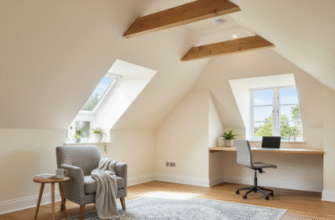
Instead of hinges, you’re bolting a solid piece of wood or a pre-made countertop directly to the wall using heavy-duty brackets, creating a permanent cantilevered surface that looks like it’s defying gravity. I installed one using an IKEA countertop remnant (the 74-inch Karlby, if we’re being specific) and some industrial steel brackets I found at a local hardware store for about thirty bucks. The whole project cost maybe $85, and it’s been holding strong for two years now—though I definately should’ve sealed the wood better because there’s a coffee stain that’s achieved permanent residency. The key is mounting it at exactly 29 inches from the floor, which is standard desk height, though I’ve met people who swear by 30 or even 28 depending on their chair situation and personal ergonomics.
Anyway, the murphy desk trend deserves its own conversation.
These are the elaborate cousins of fold-down desks—think hidden compartments, built-in shelving, sometimes even integrated lighting—and they range from simple plywood constructs to furniture-grade walnut pieces that cost more than my first car. I watched a friend build one with cubbies for her art supplies, a corkboard backing, and a fold-out section for her printer, and the whole thing looked like a sleek cabinet when closed. The catch is complexity: you’re dealing with more hardware, more precise measurements, and significantly more opportunities for things to go catastrophically wrong. She spent probably 40 hours on hers, measured twice and still had to remake one panel, and used enough wood glue to bond a small船 together—but the result was genuinely impressive, even if I detected a slight tremor in her eye when I asked if she’d do it again.
The corner desk configuration exploits dead space most people ignore completely. Turns out, corners are basically free real estate in compact living, and mounting an L-shaped surface across two adjacent walls creates surprising amounts of workspace without projecting far into the room. I’ve seen these done with two separate shelves meeting at a 90-degree angle, or with a single custom-cut piece wrapping the corner, and both approaches work fine as long as you’re comfortable with slightly more complicated trigonometry during installation. The irony is that measuring and cutting angles somehow feels harder than it should be, even when you know it’s just basic geometry.