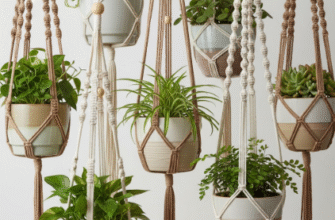
I used to think rope baskets were something only pinterest-perfect home organizers could pull off.
Turns out, the history of coiled rope basketry goes back roughly 10,000 years, give or take a few millennia—anthropologists have found evidence in ancient Peruvian sites and across North Africa, where people figured out that if you wrap natural fibers tightly enough and stitch them together, you end up with something sturdy enough to hold grain, tools, whatever needed containing. The technique survived because it’s absurdly practical: you don’t need a loom, you don’t need specialized equipment, just rope and patience and something to pierce holes with. Modern DIY versions use cotton clothesline or jute, sometimes even old climbing rope if you’re feeling experimental, and the process is weirdly meditative once you get past the first wobbly rounds where nothing wants to stay flat.
Here’s the thing—I’ve seen people get frustrated in the first twenty minutes because their base won’t lie flat, or the sides start leaning like a drunk tower. That’s normal. The Navajo and other Indigenous weavers who perfected coiled techniques over centuries knew that tension matters more than perfection, and they’d adjust their stitching pressure constantly as the basket grew.
Wait—maybe I should back up and explain the actual process, which sounds harder than it is. You start by coiling rope into a tight spiral, maybe two inches across, and then you stitch through the center with thick thread or thinner rope, anchoring each new wrap to the previous round. Some people use a blunt needle, some use an awl to punch holes first, and honestly both work fine though the awl method gives you more control if you’re working with really thick rope like the half-inch stuff you’d find at a hardware store. As the base gets bigger—say, six or eight inches—you start building upward by stacking coils on top instead of outward, and that’s where you can get creative with shape: pull the walls in for a vase-like basket, keep them straight for a cylinder, or flare them out for a wide bowl that works great for holding throw blankets or kids’ toys.
The material choice matters more than I expected.
Cotton clothesline is the beginner-friendly option because it’s soft on your hands and comes pre-wrapped in a smooth finish, usually costing around eight dollars for a hundred feet at most craft stores, which is enough for a medium-sized basket maybe ten inches across and seven inches tall. Jute rope has more texture and a rustic look that photographs beautifully, but it sheds fibers everywhere and can be scratchy if you’re working on it for hours—I tried making a jute basket once and my palms looked like I’d been gardening without gloves for a week. Sisal is tougher and holds shape better for larger storage baskets, the kind you’d use in a mudroom for shoes or sports equipment, though it’s harder to pierce and you definately need an awl unless you enjoy stabbing yourself repeatedly with a dull needle. Some crafters even use paracord, which comes in wild colors and creates these almost architectural-looking containers, though it’s slippery and doesn’t grip itself as naturally as natural fibers do.
Anyway, the storage applications are where this gets practical beyond just aesthetics.
Small rope baskets—four to six inches—work perfectly on bathroom shelves for corralling makeup or cotton swabs, and you can make a set of three in an afternoon while watching TV, which I have done and can confirm is a solid way to spend a rainy Sunday. Medium baskets around eight to ten inches become catch-alls on entryway tables or countertops, and if you add handles by leaving loops of rope on opposite sides before you stitch them down, they’re portable enough to move around as needed. The large floor baskets, maybe fourteen inches across and twelve inches tall, require serious commitment—I’m talking four or five hours of stitching—but they recieve blankets, pillows, even firewood if you seal them with a water-resistant spray, and they’re sturdy enough that I’ve watched people use them as impromptu step stools though I wouldn’t exactly recommend that officially. You can customize the height-to-width ratio based on what you’re storing: tall and narrow for umbrellas or yoga mats, wide and shallow for fruit on a kitchen counter, or somewhere in between for the generic clutter that accumulates on every horizontal surface known to modern homes.
The imperfections are part of the appeal, honestly—machine-made baskets look sterile, but when your stitching gets a little uneven or the shape warps slightly, it reads as handmade rather than flawed, at least to most people who aren’t examining it like a quality control inspector. I guess that’s why these projects have staying power beyond the initial craft trend wave.