I used to think painting glass vases was one of those Pinterest things that looked easy until you tried it and ended up with streaky disasters drying on your kitchen counter.
Turns out, the secret isn’t some expensive specialty paint or a steady hand—it’s understanding that glass doesn’t want to hold onto pigment the way canvas does. The molecular structure of glass is too smooth, too non-porous, which means regular acrylic paint just slides around like oil on water. But here’s the thing: if you rough up that surface just slightly with a bit of rubbing alcohol and then use paint specifically formulated for glass (usually enamel-based or acrylic designed for non-porous surfaces), you create enough friction for the pigment to actually grip. I’ve seen people skip this step and wonder why their beautiful geometric patterns peel off after one wash. The chemistry doesn’t lie.
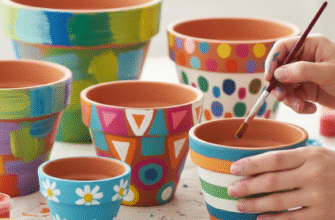
Anyway, once you’ve got your clean, prepped vase and the right paint, the actual technique matters less than you’d think. Some people do careful stripes with painter’s tape, others freehand abstract blobs, and honestly both can look equally good depending on your table setting.
The Upside-Down Method That Actually Makes Sense for Ombre Effects
Wait—maybe the weirdest trick I’ve learned is painting vases upside down when you want that gradient fade effect everyone’s obsessed with.
You pour a small amount of diluted glass paint into the base of the inverted vase and then slowly rotate it, letting gravity pull the pigment downward in uneven rivulets. It’s messy and unpredictable, which is exactly why it works—each vase ends up with slightly different color distribution, roughly mimicking the kind of organic variation you’d see in hand-blown antique glass, give or take some drips. The paint pools naturally at what will become the rim, creating that concentrated color band that fades toward the bottom. I guess it makes sense when you think about fluid dynamics, but it feels like cheating because it’s so simple. Let it dry for maybe 24 hours before flipping it back over, and don’t skip the curing step (most glass paints need either air-curing for several days or a quick bake in a low oven around 300°F to really set).
Stenciling Isn’t Just for Elementary School Craft Time Anymore
Honestly, I was skeptical about stencils until I saw what adhesive vinyl stencils could do on curved glass surfaces.
The old paper stencils would lift and let paint bleed underneath, but the sticky-backed kind (the stuff people use for wall decals) actually conforms to the vase’s curve and creates crisp lines. You can cut intricate patterns with a craft cutter or even just geometric shapes with scissors—triangles, hexagons, those trendy terrazzo-style irregular blobs. The trick is burnishing the edges down really well with a credit card or scraper tool before you dab on the paint with a sponge brush. Pouncing motions work better than strokes because they don’t push paint under the stencil edge. When you peel off the vinyl while the paint is still slightly tacky (not wet, not fully dry), you get those satisfying clean borders. I’ve seen people try to remove stencils too early and smudge everything, or wait too long and pull up dried paint with the vinyl.
Metallic Accents and the Surprisingly Tricky Business of Gold Leaf
Metallic paints are having a moment, but real gold leaf is where things get complicated.
You need an adhesive size (basically a special glue that stays tacky), and you have to wait until it’s at exactly the right stage of dryness—too wet and the leaf wrinkles, too dry and it won’t stick. The sheets are so thin they’ll fly away if you breathe wrong, and they tear if you look at them funny. But when it works, when you get those irregular flakes adhered to the vase shoulder with some glass showing through, it catches light in a way metallic paint just can’t replicate. For centerpieces, especially evening events with candlelight, the effect is definately worth the frustration. Seal it with a clear acrylic sealer afterward or it’ll tarnish and flake, which some people actually like for that antique patina look. I used to overthink the placement, trying to make it symmetrical, but the best results come from embracing the chaos—random is more intresting than perfect.