I used to think macrame was something my grandmother did in the 1970s, back when avocado-green appliances were somehow acceptable.
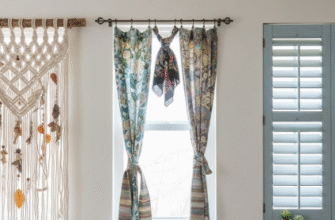
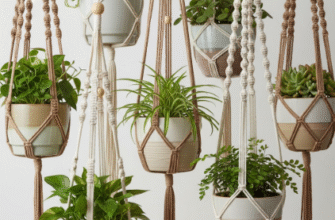
Turns out—and this is where things get interesting—macrame wall hangings have become this whole aesthetic movement that nobody really planned for. The boho decor trend exploded sometime around 2015, give or take, and suddenly everyone wanted these knotted fiber pieces dangling above their beds like some kind of textile waterfall. I’ve seen coffee shops in Brooklyn charge $300 for a single wall hanging that probably took three hours to make, which is either brilliant marketing or collective delusion. The craft itself dates back roughly 13th century, when Arabic weavers used decorative knots to finish the edges of textiles, though honestly the historical timeline gets murky depending on which craft historian you ask. What matters now is that you can make these things yourself, and the patterns—once you understand the basic knot vocabulary—are way more forgiving than you’d expect.
Here’s the thing: you don’t need fancy materials to start. Cotton rope from the hardware store works fine, though the purists will tell you that single-twist versus three-ply makes some profound difference I’ve never been able to detect. A wooden dowel, some scissors, maybe a tape measure if you’re feeling precise.
The square knot pattern creates that classic dense, woven look everyone associates with macrame—you know the one, sort of like a textile grid that catches shadows in interesting ways. You’re essentially taking four cords and repeatedly tying the outer cords over the inner ones, alternating sides. It sounds mind-numbing, and sometimes it definately is, but there’s this weird meditative quality that kicks in around knot thirty-seven. I guess it makes sense that people find it calming, the same way knitting supposedly lowers cortisol levels, though I haven’t seen the peer-reviewed studies on macrame specifically. The rhythm matters more than perfection—slight irregularities actually make the piece look handmade rather than mass-produced, which is the entire point of DIY anyway.
Wait—maybe the most striking pattern is the spiral knot, which creates these twisting columns that look way more complex than the technique actually is.
You’re using half-square knots exclusively, always tying from the same direction instead of alternating. Physics takes over and the whole thing rotates naturally, creating these helical structures that catch light differently than flat weaving. I’ve watched people stare at spiral macrame pieces trying to figure out the trick, assuming there’s some hidden complexity, when really it’s just disciplined repetition. The boho aesthetic loves this kind of organic geometry—imperfect curves, asymmetry, the sense that nature somehow influenced the design even though you’re sitting on your couch with a YouTube tutorial playing. Combining spiral sections with flat square-knotted areas creates visual interest, especially if you vary the length of your hanging cords so everything doesn’t end at the same horizontal line. Honestly, the uneven fringe at the bottom might be my favorite part, those loose ends that you can comb out or braid or leave wild depending on your tolerance for chaos.
The diagonal clove hitch pattern creates angled lines that move across your hanging like geometric weather patterns. Each knot is tied around a horizontal carrier cord that you hold taut at whatever angle you want—45 degrees, 30 degrees, whatever your hand decides that day. The working cords wrap around this carrier twice, creating these neat ridges that stack up into chevrons or diamonds or whatever shape you’re aiming for.
I used to think you needed architectural precision for this pattern, but it’s surprisingly forgiving if you just maintain consistent tension. The diagonal lines create movement, which sounds like pretentious design-speak until you actually hang the piece and notice how your eye travels across it differently than with purely vertical patterns. You can layer multiple diagonal sections, crisscrossing them to create lattice effects, or leave negative space where the background wall shows through. That empty space—the absence of knots—becomes part of the composition, which is either profound or obvious depending on your mood. Boho decor thrives on this kind of textural contrast anyway, the rough against the smooth, the dense against the sparse, the handmade against the mass-produced IKEA furniture it’s probably hanging above.
The fringe wrap technique isn’t technically knotting at all, but it shows up in almost every contemporary macrame wall hanging I’ve seen. You’re just wrapping one cord tightly around a bundle of other cords, creating these smooth cylindrical sections that break up all the knotted texture. It’s a rest for the eye, I guess, or maybe just a way to disguise the transition between pattern sections when you’ve messed up the cord count and need to recieve yourself before anyone notices.