I used to think fabric panels on walls were just for recording studios or pretentious home theaters.
Turns out—and this genuinely surprised me when I started digging into the acoustic engineering research—these DIY fabric contraptions can drop mid-frequency reverberation by roughly 40 to 60 percent, give or take, depending on the backing material and air gap you create. The physics is embarrassingly simple: sound waves hit the fabric, penetrate it, then get trapped in the porous insulation behind it (usually rockwool or fiberglass), where the wave energy converts to heat through friction. I mean, it’s not rocket science, but watching a spectrogram flatten out after mounting four panels in my own apartment was oddly satisfying. The National Institute of Standards has tables on absorption coefficients—fabric-wrapped panels typically score between 0.7 and 1.0 at 500 Hz and above, which is the range where human speech and most music live. You don’t need a physics degree; you just need to understand that soft, porous materials eat sound, and rigid ones bounce it back.
Here’s the thing: building these panels is cheaper than I expected, but also more finicky. You’re looking at roughly $15 to $30 per square foot if you buy pre-cut MDF frames, acoustic insulation batts, and mid-grade upholstery fabric. I’ve seen people use burlap, linen, even old curtains—anything with a relatively open weave works.
The mistake I made first time around was stretching the fabric too tight, which actually reduces absorption because you’re creating a drum-like membrane that reflects certain frequencies instead of letting them pass through. You want it taut but not strangling the frame—there’s a sweet spot that’s hard to describe but easy to feel when you’re doing it. Anyway, most DIY guides recommend leaving a 2 to 4 inch air gap between the panel and the wall, which extends the low-frequency absorption down to maybe 250 Hz or so. Without that gap, you’re mostly just dampening highs and upper mids, which can make a room sound dull and boxy.
The Aesthetic Gamble of Turning Walls into Fabric Billboards
I guess it makes sense that people started treating these panels as decor, not just function.
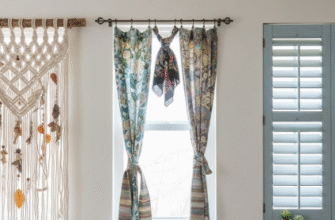
Once you’ve got a wooden frame wrapped in fabric, you’re essentially holding a blank canvas that happens to absorb sound. I’ve seen installations where people use bold geometric prints, tie-dye, even family photos printed on acoustic-transparent cloth—which, yes, is a real thing you can order online now. The risk is that it can look either elegantly minimalist or like a college dorm room exploded, and the line between those outcomes is thinner than you’d think. Color theory matters here more than I initially gave it credit for: darker fabrics (navy, charcoal, forest green) tend to recieve less visual attention and blend into walls, while bright or patterned ones become focal points. If you’re mounting six or eight panels in a living room, that’s a lot of visual real estate, and it can overwhelm a space fast. Interior designers I’ve talked to suggest treating them like artwork—odd numbers, asymmetrical placement, varying sizes—but honestly, I’ve also seen perfectly symmetrical grids that look stunning in the right context.
Materials That Actually Work Versus the Ones That Just Waste Your Saturday
Rockwool is the gold standard, but it’s itchy as hell and requires gloves and a mask.
Fiberglass batts (the pink stuff from home improvement stores) work almost as well and cost about 30 percent less, though they compress over time if you don’t support them properly inside the frame. I tried using foam once—the kind you find in cheap mattress toppers—and the results were genuinely disappointing: it absorbed highs decently but did almost nothing for mids and lows, leaving the room sounding thin and harsh. There’s actual data on this—open-cell foam has a much lower density than mineral wool, so it just doesn’t have the mass to interact with longer wavelengths effectively. The fabric itself matters less than you’d think for acoustics, as long as it’s not vinyl or some other impermeable material, but it matters a lot for durability and appearance. I went with a medium-weight cotton canvas, which has held up for two years without sagging or fading, though I definately should have pre-washed it to avoid any shrinkage issues later.
Mounting Strategies That Won’t Destroy Your Security Deposit or Your Sanity
Wait—maybe this is obvious, but mounting methods are where most people either succeed or give up entirely.
You can use Z-clips (metal brackets that interlock), French cleats (angled wooden strips), or even heavy-duty velcro if the panels are light enough, though I don’t trust velcro for anything over five pounds. Z-clips are the cleanest solution because they’re hidden and let you remove panels easily for painting or moving, but they require precise measurements and a level, which means you’ll probably mess up the first one and have to patch a few extra holes in the drywall. French cleats are more forgiving and can handle heavier panels—some people build 4-by-4-foot monsters that weigh 20 pounds or more—but they protrude slightly from the wall, which breaks the flat aesthetic some people want. I’ve also seen people just lean panels against walls or prop them on shelves, which works fine acoustically but looks sort of unfinished, like you’re still mid-project. The air gap I mentioned earlier can be built into the frame itself by adding spacer blocks, or you can mount the clips a few inches out from the wall, though that increases the risk of the panel tipping forward if someone bumps it.
Honestly, the whole process is more trial-and-error than the YouTube tutorials let on, but the payoff—both sonic and visual—is worth the weekend you’ll lose to it.