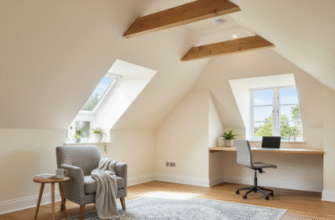

I used to think large open rooms were aspirational—until I moved into one and felt like I was living in a hotel lobby.
The problem with expansive spaces isn’t the square footage itself, it’s the psychological disconnect that happens when your brain can’t find edges to anchor to. Environmental psychologists have studied this for decades, measuring cortisol levels in people navigating oversized interiors versus compartmentalized ones, and the data consistently shows that humans crave what researchers call “refuge zones”—smaller pockets within larger areas where we can recieve sensory feedback that we’re contained, protected, held. It’s not about claustrophobia, it’s about scale relativity: when a room is too big, your presence in it feels diminished, almost spectral. I’ve seen this in loft apartments where couples eat dinner twenty feet apart not because they’re fighting, but because the dining table got swallowed by the void around it. The furniture floats. The voices echo. Nobody feels at home.
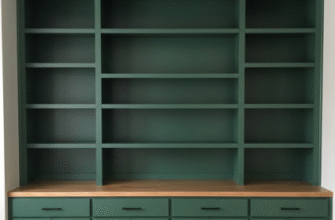
Anyway, here’s the thing—you don’t need to build walls to fix it. Designers have been using what’s called “implied architecture” for years: area rugs that define conversational zones, hanging pendant lights that lower the perceived ceiling height in specific spots, even strategically placed bookcases that act as soft dividers without blocking sightlines. One architect I spoke with described it as “creating rooms within rooms,” and she wasn’t talking about drywall.
Layering Light Sources to Compress Visual Space (And Why Overhead Fixtures Sabotage Intimacy)
Single-source lighting is the enemy of coziness. When you rely on one central fixture—especially those recessed ceiling cans that builders love—you’re bathing the entire room in uniform brightness, which paradoxically makes the space feel even larger and more institutional. The trick is to layer: table lamps at varying heights, floor lamps in corners, maybe a string of Edison bulbs if you’re not worried about looking like every coffee shop in 2014. Each light source creates its own micro-environment, its own gravitational pull. I guess it’s similar to how campfires work—people naturally cluster around point sources of warmth and illumination, and you can replicate that instinct indoors by scattering smaller lights instead of flooding everything from above. Studies on circadian lighting have shown that multiple lower-wattage sources also reduce the harshness that makes us squint and withdraw, though honestly I just know it feels better when I’m not standing under a interogation lamp while trying to read.
Textile Density and the Acoustic Properties of Feeling Enclosed
Sound matters more than you’d think.
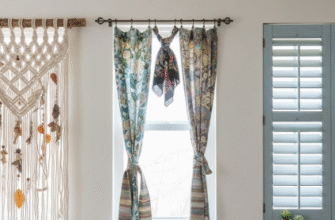
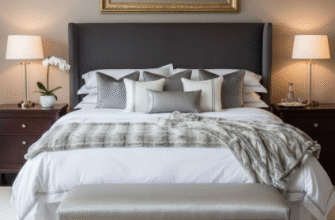
Hard surfaces—polished concrete, bare drywall, glass—turn every footstep and cough into an event. In large rooms, this acoustic feedback loop is exhausting; your brain is constantly processing reflections and reverb, which subconsciously signals “public space” rather than “sanctuary.” Textile density is the designer term, but really it just means: add soft stuff. Heavy curtains that puddle on the floor, layered throw blankets, upholstered furniture with deep cushions, even wall-mounted tapestries if you’re feeling medieval. These materials absorb sound waves, deadening echoes and creating what acousticians call a “shorter reverberation time”—basically, the room stops amplifying itself. I’ve walked into open-plan living rooms that felt immediately warmer just because someone had draped a chunky knit blanket over the back of a sofa. It’s not magic, it’s physics, but the effect is nearly instantaneous. You stop whispering. You stop feeling watched by the empty space.
Furniture Arrangement as Psychological Boundary-Making (Or Why Pushing Everything Against the Walls Is a Trap)
Wait—maybe this is obvious, but I see people make this mistake constantly: they shove all the furniture against the perimeter walls, leaving a massive empty center, and then they wonder why the room feels unwelcoming.
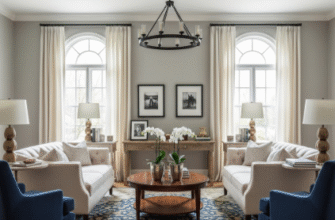
The solution is counterintuitive—pull furniture away from the walls and float it in clusters. Create conversational groupings where sofas and chairs face each other at intimate distances (roughly 4 to 8 feet, give or take), even if that means leaving gaps behind them. Interior designers call these “activity zones,” and the idea is that each cluster functions as its own mini-room with implied boundaries. A rug anchors it. A side table marks the edge. Your brain reads these arrangements as destinations rather than obstacles. I used to resist this because it felt wasteful to leave wall space unused, but turns out that negative space behind furniture actually enhances the sense of intentional design—it signals that the room was arranged for human interaction, not just to maximize square footage. One study from environmental psychology found that people spend 60% more time in spaces with clustered seating versus perimeter arrangements, probably because the former feels like a place to gather while the latter feels like a waiting room.
Honestly, none of this is about shrinking your space—it’s about teaching it to hold you.