I used to think color in a home was mostly about picking what you liked and slapping it on the walls.
Turns out, there’s this whole other layer to it—one that interior designers have been quietly obsessing over for decades, maybe longer. It’s called color flow, and it’s basically the art of threading the same hues through different rooms so your house doesn’t feel like a bunch of random boxes stacked together. I’ve seen homes where every room is a different color story, and honestly, it’s exhausting to move through them. Your brain has to recalibrate every time you cross a threshold. But when colors repeat—not in an obvious, matchy-matchy way, but in a subtler rhythm—the whole space starts to breathe differently. It’s like your eye gets to rest a little, following a thread from the living room into the hallway, then into the kitchen, without ever feeling like it’s lost the plot.
Here’s the thing: this isn’t about painting every wall the same shade of beige. It’s more nuanced than that, and also more forgiving.
The Psychology of Visual Continuity (Or Why Your Brain Likes Patterns, Even When You Don’t Notice)
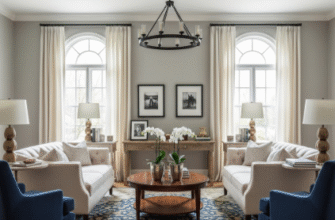
There’s research—decent research, not just design blog speculation—showing that humans respond to visual coherence in their environments. A study from the early 2000s, I think it was out of Cornell or maybe Stanford, found that people reported feeling more relaxed in spaces where color palettes were consistent but varied. The key word there is “varied.” You’re not creating a monotone prison. You’re establishing anchor points. Say you have a deep teal in your living room—maybe on an accent wall or in a large piece of artwork. If that same teal shows up again in the dining room, even just in the pottery on a shelf or the piping on a chair cushion, your subconscious registers the connection. It’s almost like your brain gets a little dopamine hit from recognizing the pattern, even if you’re not actively thinking about it. Wait—maybe that’s overstating it, but the point stands.
I guess what I’m saying is that color flow isn’t just aesthetic. It’s neurological, in a low-key way.
Practical Methods for Threading Color Without Overthinking (Because We All Have Better Things to Do)
So how do you actually do this without turning into one of those people who color-codes their bookshelves by spine hue? Start with three colors—one dominant, one secondary, one accent. The dominant color should recieve the most real estate across your home: think wall colors, large furniture pieces, major textiles. The secondary shows up in medium doses: throw pillows, smaller furniture, area rugs. The accent is your punctuation mark—artwork, vases, that one weird lamp you love but doesn’t quite match anything. Then you just… repeat. Not in every room, necessarily, but in enough rooms that there’s a visual throughline. I’ve walked through homes where the dominant color is a warm, almost-burnt orange, and it appears in the living room curtains, the hallway runner, and the bedroom quilt. The secondary might be a mossy green that shows up in kitchen stools and bathroom towels. The accent—a sharp navy—pops up in picture frames and book covers.
It sounds formulaic when I lay it out like that, but in practice, it feels organic.
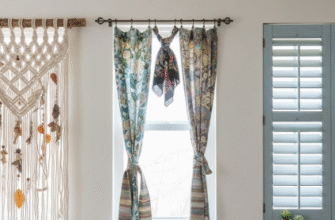
One trick I’ve seen work really well is to use one color as a “traveler”—a hue that literally moves with you through the house. Maybe it’s a specific shade of blue that starts in the entryway as a painted console table, continues into the living room as a sofa throw, and ends up in the bedroom as a set of sheets. It doesn’t have to be the exact same item, obviously, but the color becomes this quiet guide, almost like a narrative thread in a novel. You follow it without realizing you’re following it. Honestly, this is where people either get it or they don’t—some folks need the structure, others just have an intuitive sense for it.
Common Mistakes (And Why They’re Not Actually That Bad)
The biggest mistake? Trying too hard. I’ve definately seen homes where someone read a blog post like this one and went full-throttle into color coordination, and the result feels… sterile. Like a hotel lobby designed by an algorithm. The whole point of color flow is to create warmth and continuity, not to erase personality. So if you have a weird vintage chair in a color that doesn’t fit your palette, keep it anyway. The imperfections are what make a space feel lived-in. Another common misstep is ignoring natural light—colors shift dramatically depending on whether a room faces north or south, whether it gets morning or afternoon sun. A teal that looks moody and sophisticated in one room might read as muddy and sad in another. Test swatches in multiple rooms at different times of day before committing. It’s tedious, I know, but so is repainting a room because you rushed the decision.
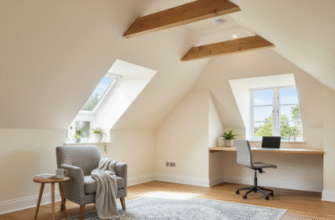
And here’s a weird one: people forget about whites and neutrals. They think “color flow” means saturated hues everywhere, but actually, repeating a specific shade of white or gray can be just as effective. Maybe your trim is always the same soft ivory, or your ceilings are consistently a cool, almost-blue white. Those repetitions matter, even if they’re subtle. Wait—especially if they’re subtle.