
I used to think formal living rooms were those sterile museum spaces where nobody actually sat.
Turns out, that’s exactly what they became in most American homes—roughly from the 1950s through the early 2000s, give or take a decade depending on who you ask. Interior designers started calling them “parlors” again, which somehow made the whole thing worse. These were rooms filled with furniture wrapped in plastic, coffee tables that never held coffee, and an unspoken family rule that you only entered when Great Aunt Margaret visited twice a year. The psychology behind this is fascinating, actually: we created spaces in our homes that signaled status and taste, but we were so afraid of disrupting that signal that we essentially cordoned them off from daily life. Some anthropologists I’ve read compare it to how certain Indigenous cultures maintain sacred spaces, except instead of spiritual significance, we were protecting… beige upholstery. The irony wasn’t lost on anyone who actually studied domestic architecture.
But here’s the thing: a formal living room doesn’t have to feel like a velvet rope experience. I’ve seen spaces that manage to thread this needle beautifully—they maintain a sense of occasion without making you feel like you need to take your shoes off and whisper.
The Texture Problem That Nobody Talks About Enough
Walk into most formal living rooms and everything is smooth. Silk pillows, polished wood, glass tables, maybe some lacquered surfaces if the homeowner went through an Art Deco phase. It’s like someone decided that “formal” meant “eliminate all tactile variation.” Which is weird, because if you look at actual historic formal spaces—I’m thinking Victorian parlors, Georgian drawing rooms, even mid-century modern showrooms—they had texture everywhere. Velvet next to linen next to carved wood next to hammered metal.
The fix is almost embarrassingly simple: layer in materials that invite touch.
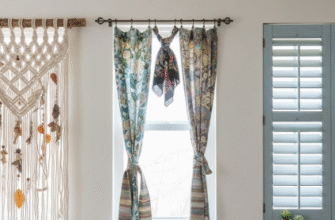
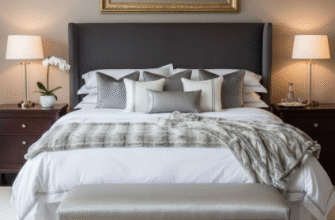
I mean, not in a “please fondle my throw pillows” way, but in a way that makes the space feel less like a showroom and more like a room humans might actually inhabit for more than six minutes. Chunky knit throws over the arm of that pristine sofa. A jute or sisal rug under the Persian one (yes, you can layer rugs, and honestly it looks better than either rug alone). Linen curtains instead of silk—they wrinkle, which somehow makes them feel more honest. Books with actual worn spines on the shelves, not color-coordinated paperbacks that nobody’s read. I’ve noticed that when you add these textural elements, people physically relax when they enter the room—their shoulders drop maybe half an inch, their pace slows slightly. It’s subtle but it’s there.
Lighting That Doesn’t Make You Feel Like You’re Being Interrogated
Overhead lighting in formal spaces is almost always wrong.
I don’t know why we default to chandeliers that blast light downward like we’re trying to recreate high noon indoors, but it’s a pattern I see constantly. The result is that everyone looks slightly washed out and tired, shadows pool in unflattering ways under furniture, and the whole room feels less like an elegant gathering space and more like a very expensive waiting room. Professional lighting designers will tell you—and I’ve interviewed several for various projects—that layered lighting is everything. You want ambient light (that’s your overhead fixture, but dimmed way down), task lighting (reading lamps, accent lights on artwork), and mood lighting (candles, backlit shelves, even LED strips hidden behind crown molding if you’re feeling ambitious).
The trick is giving yourself options. Install dimmers on every single light switch in a formal living room—it’s maybe $30 per switch and it completely transforms how you can use the space. Add table lamps at different heights: one on a side table, another on a console, maybe a floor lamp in a corner that’s been looking sad and empty. I guess what I’m saying is that lighting should feel like it’s coming from multiple sources at multiple levels, the way it would if you’d just naturally accumulated lamps over years of living in a space.
Furniture Arrangemnt That Actually Encourages Conversation Instead of Staring Contests
Wait—maybe this is obvious, but I’ve seen it done wrong so many times that I’m not sure it is.
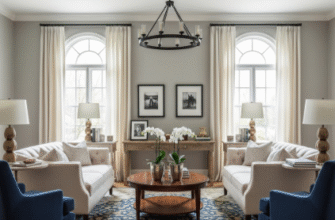
The standard formal living room setup puts two sofas facing each other across a coffee table, maybe with two chairs flanking one end. It’s symmetrical, it photographs well, and it creates what I can only describe as a conversational thunderdome. You’re forced to make direct eye contact with whoever’s sitting across from you, there’s nowhere to rest your gaze naturally, and if you’re even slightly socially anxious (which, honestly, is most people in a formal setting), it feels like a low-grade interrogation. Interior designers have known this for decades, but the layout persists because it looks balanced in floor plans.
The better approach: arrange seating in an L-shape or a loose semicircle. Put chairs at slight angles to each other rather than in perfect opposition. Create little conversation zones within the larger room—maybe two chairs angled toward each other near a window, a small settee perpendicular to the main sofa. This lets people choose their level of engagement. You can lean in for intimate conversation or lean back and observe. You can look at the person you’re talking to or glance at the fireplace or the artwork or the view outside. It sounds like a small shift, but it changes the entire social dynamic of the room. I’ve been in spaces arranged this way where people who normally perch on the edge of formal furniture actually settled in, kicked off their shoes, stayed for another drink.
Anyway, I think the core insight here is that “formal” doesn’t have to mean “inhospitable.” It can mean intentional, considered, special—without making anyone feel like they’re going to break something just by existing in the space. The best formal living rooms I’ve experienced felt like someone cared deeply about creating something beautiful, but not so deeply that they forgot people would actually need to live in it.