I used to think Brazilian interior design was just about throwing bright colors everywhere and calling it a day.
Turns out, there’s something more intricate happening—something that goes back centuries, to when Portuguese colonizers brought their azulejos tiles and encountered Indigenous building techniques that prioritized natural ventilation and materials sourced directly from the surrounding forest. The fusion wasn’t immediate, and it definately wasn’t planned, but over time Brazilian homes developed this distinctive quality where bold chromatic choices sit alongside raw wood, stone, and clay in ways that feel simultaneously loud and grounded. I’ve seen photographs of mid-century modernist homes in São Paulo where a single burnt-orange accent wall dominates a room filled with jacaranda wood furniture and woven jute rugs, and the effect is—well, it’s arresting without being chaotic, which is harder to pull off than you’d think.
Here’s the thing: the color palette isn’t arbitrary. Brazilians pull from their environment in ways that North American or European designers often don’t, or maybe can’t, given different landscapes. The yellows echo ipê trees in bloom, the deep greens mirror rainforest canopies, and those terracotta reds? They’re straight from the clay-rich soil found in regions like Minas Gerais.
When Natural Materials Become the Architecture Itself, Not Just Decoration
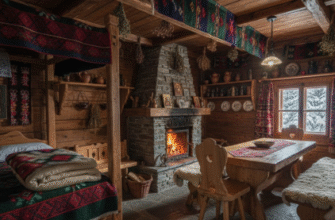
Walk into a traditional Brazilian home—say, in Bahia or rural Goiás—and you’ll notice the walls might be rammed earth or taipa de pilão, a technique involving compacted clay and sometimes cow dung (yes, really) that regulates temperature better than most modern insulation. The floors could be polished cement embedded with local stones, and the ceiling beams are often reclaimed hardwood from demolished older structures, because waste wasn’t really a concept people could afford. What strikes me is how these materials aren’t treated as rustic or quaint—they’re just logical choices that happen to look stunning when paired with, say, a cobalt blue kitchen island or magenta throw pillows.
I guess it makes sense that a country with over 60,000 tree species would build furniture from them.
Brazilian designers like Sergio Rodrigues and the Campana Brothers took this material honesty and pushed it further—Rodrigues’ Mole chair uses leather and wood in this slouchy, unapologetic way, while the Campanas literally use cardboard, rope, and stuffed animals in their pieces, which sounds absurd until you see how the textures create this visual weight that balances out aggressive color blocking on surrounding walls. There’s a 2019 study from the University of São Paulo (I think—maybe 2018, the citation’s fuzzy) that analyzed thermal performance in homes using traditional materials versus concrete, and the traditional methods outperformed by roughly 15-20 degrees Celsius in peak summer heat, which explains why these techniques stuck around despite industrialization.
The Chromatic Maximalism That Somehow Doesn’t Overwhelm Your Retinas
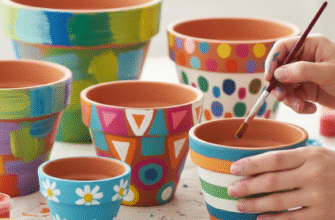
Anyway, about those colors—Brazilian interiors often feature what I’d call strategic maximalism. You might see a living room with mustard-yellow walls, a teal sofa, terracotta floor tiles, and dark wooden shelving, and somehow it doesn’t look like a kindergarten exploded. The trick, near as I can figure, is the ratio of bold to neutral and the use of natural materials as visual anchors. That wooden shelving or a large jute rug creates enough earthy neutrality that your eye can rest, even while surrounded by saturated hues. It’s not minimalism—it’s the opposite, really—but there’s a rhythm to it.
I’ve noticed younger Brazilian designers now incorporate more muted tones, maybe influenced by Scandinavian trends or Instagram aesthetics, but the core approach remains: color as emotional expression rather than decoration.
Why Texture Matters More Than You’d Expect When Everything’s Already Visually Loud
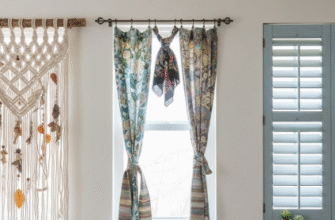
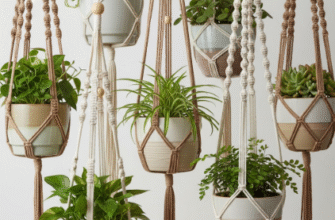
Wait—maybe the most underappreciated aspect is texture layering. A room might have smooth plastered walls painted vivid orange, but then you add rough-hewn wooden furniture, a macramé wall hanging (which experienced a huge revival in Brazil around 2015, possibly earlier in the Northeast), woven baskets, and ceramic vessels with visible throwing marks. Each texture catches light differently, so even a monochromatic space—rare, but they exist—feels dynamic. The interplay between polished and raw, smooth and coarse, creates this tactile richness that keeps the eye moving without exhausting it. Honestly, it’s a bit like how coral reefs work, where biodiversity creates visual complexity that somehow feels coherent because everything evolved together in the same ecosystem.
I used to wonder if this approach would translate outside Brazil, and the answer seems to be: sort of, but not really. You can buy the furniture, copy the color schemes, source similar materials—but without the cultural context of Carnaval’s exuberance, the climate’s demands, and that distinctly Brazilian comfort with contradiction (formal yet casual, modern yet traditional), it often ends up looking like a theme rather than a living space. Which maybe proves the point that great design isn’t just aesthetic—it’s embedded in place, in necessity, in the accumulated decisions of people responding to their specific corner of the world over generations.