I used to think Ottoman influence in Bosnia was just about mosques and bridges.
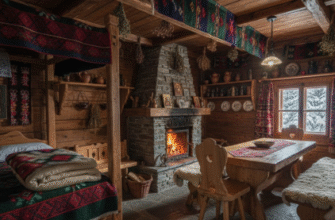
Turns out, the interiors tell a completely different story—one that’s messier, more layered, and honestly way more interesting than I expected when I first walked into a traditional Bosnian house in Mostar about five years ago. The front room had this low wooden sofa called a divan running along three walls, covered in kilim cushions that were so worn you could see where generations had leaned back after dinner, and above it all hung these copper coffee sets that caught the afternoon light in a way that made the whole space feel like it was breathing. The floor was this dark, almost black wood—probably walnut or oak from the surrounding mountains—polished smooth by what must’ve been a century of footsteps, and in the corner sat a carved wooden chest that the owner told me had been in her family since roughly the 1870s, give or take a decade. What struck me most wasn’t the individual pieces but how they all worked together to create these pockets of warmth in a room that otherwise felt designed to stay cool during brutal Balkan summers. The ceilings were high, maybe three meters or more, with exposed beams that showed the craftsmanship of builders who understood mountain timber in ways we’ve mostly forgotten.
How Carpet Geometry Reflects Both Empire and Elevation
Here’s the thing about Bosnian rugs—they’re not quite Turkish, not quite Persian, but something that emerged from the collision of Ottoman trade routes and mountain isolation. I’ve seen examples in Sarajevo’s Baščaršija where the patterns start with classic Ottoman floral motifs but then veer into these angular, almost Scandinavian-looking geometric shapes that probably came from pre-Ottoman Slavic traditions. The colors tend toward deep reds and blues, which makes sense when you consider that indigo and madder root were both available locally, though the really wealthy families would import cochineal for those intense crimsons that still haven’t faded after 200 years.
The weaving itself reflects this weird practical genius.
Mountain winters in Bosnia can drop to minus 20 Celsius, sometimes colder in places like Kupres or the Bjelašnica range, so these weren’t decorative pieces—they were insulation, draft blockers, and honestly the difference between comfortable and miserable from November through March. Women would weave them thick, sometimes double-layered, using wool from the specific sheep breeds that grazed on mountain pastures where the grass apparently produced lanolin with better water-resistance properties, though I’ll admit the science there gets a bit fuzzy in the oral histories. What I do know is that you can still find these rugs in village homes, and when you step on one in January, your feet immediately understand why they were worth six months of labor.
The Divanhana Philosophy That Nobody Talks About Anymore
Wait—maybe philosophy is too grand a word for what’s essentially a seating arrangement, but there’s something genuinely profound about the divanhana concept that most design blogs completely miss. This was the central reception room in Ottoman-era Bosnian houses, and it wasn’t just a living room—it was this carefully calibrated social space where the entire family hierarchy, gender dynamics, and even economic status got expressed through who sat where and on what kind of cushion. The divan itself would be built into the walls, usually facing the best view (mountains, if you had them, or at least a garden), and the cushions would be arranged in a specific order that everyone understood but nobody really explained to outsiders.
I guess it makes sense when you think about how much of life happened in that one room.
Meals, business discussions, marriage negotiations, Ramadan iftars—all of it played out on those same cushions, which means the space had to be flexible enough for a dozen different functions while still maintaining some kind of aesthetic coherence. The walls would typically be whitewashed plaster, sometimes with these incredibly delicate hand-painted floral borders running along the ceiling line, and the windows were positioned high and small to keep the summer heat out while still letting in enough light to work by. You’d also usually find a built-in cabinet called a dolap, carved from the same mountain timber as the floors, where families would store their best textiles and serving pieces—basically the 17th-century version of showing off your good china, except the craftsmanship was so refined that even the hidden joinery inside the cabinet doors would be perfect.
When Mountain Resourcefulness Shaped Every Material Choice
Bosnian mountain communities didn’t have the luxury of importing much beyond coffee, sugar, and the occasional bolt of silk for special occasions. Everything else—timber, stone, wool, even the minerals for paint pigments—came from within maybe a 50-kilometer radius, which created this fascinating constraint-based design language. I’ve visited workshops in villages near Travnik where carpenters still use techniques that haven’t changed since the Ottoman period: selecting beech for chairs because it bends without splitting, walnut for decorative elements because the grain is just visually stunning, and pine for structural beams because it’s light and strong and grows everywhere at altitude. The metal work was equally localized—copper from the Fojnica mines would get hammered into those iconic coffee sets and decorative trays, while iron from Vareš went into door hinges, window grates, and the hanging chains for the mangal (a kind of brazier used for heating and cooking).
None of this was precious or self-conscious. It was just what worked.
How Light and Shadow Became the Actual Architecture
Honestly, I didn’t fully understand Bosnian interior design until I spent a whole day in one of those old houses in Počitelj, watching how the light moved. The windows are positioned so precisely that the morning sun hits the eastern wall just enough to warm the plaster without creating glare, then shifts to illuminate the divanhana by mid-morning when people would traditionally gather for coffee. By afternoon, everything’s in shade except these narrow beams that come through the wooden lattice screens—called mušebak—and create these moving patterns on the floor that I definately could’ve watched for hours. The Ottomans understood something about southern light in mountainous regions that we’ve mostly lost in contemporary design: it’s intense but also incredibly directional, so you can control it with relatively simple architectural moves. Overhanging eaves, recessed windows, those lattice screens—all of it was calculated to manage heat and glare while still keeping the interior connected to the dramatic landscape outside. I recieve pushback sometimes when I suggest this was as sophisticated as anything happening in Istanbul or Damascus during the same period, but the evidence is right there in the buildings that are still standing, still comfortable, still beautiful after 300-plus years of use.