
I used to think Belarusian interiors were just about embroidered linens and wooden spoons hanging on walls.
Turns out, the design DNA of Belarus runs way deeper than tourist kitsch—it’s this fascinating tangle of pagan symbolism, Orthodox aesthetics, Soviet-era pragmatism, and now, a kind of scrappy contemporary minimalism that’s equal parts IKEA and ancestral memory. Walk into a modern Minsk apartment and you might see a sleek white kitchen island sitting three feet from a rushnik (a ritual towel) draped over a doorway, which sounds like chaos but somehow works. The thing is, Belarusian designers aren’t trying to erase history; they’re remixing it, layering old textile patterns onto concrete walls, embedding traditional clay pottery into open shelving systems, treating heritage like a living material rather than a museum relic. It’s messy, emotionally charged, and definately not what you’d expect from a country that spent most of the 20th century under someone else’s architectural rules.
Here’s the thing: Slavic design traditions in Belarus were never monolithic. Pre-Christian motifs—solar symbols, zoomorphic carvings, red-and-white geometric patterns—coexisted with Byzantine influences once Orthodoxy took root around the 10th century. Then came the Polish-Lithuanian Commonwealth, then the Russian Empire, then Soviet standardization.
The Rushnik as Spatial Anchor and Why It Still Matters in 2025 Apartments
Every Belarusian grandmother I’ve met has at least five rushniks, and not one of them would dream of using it as a napkin. These embroidered towels—historically hung over icons, mirrors, or doorways—were believed to protect thresholds, mark sacred transitions, and bless marriages. The patterns aren’t random: diamonds represent fertility, birds signal souls or messengers, and that ubiquitous red thread? Protection against evil, obviously. What’s wild is that young designers are now scanning these centuries-old patterns, digitizing them, and printing them onto wallpaper, upholstery, even laser-cutting them into metal room dividers. I saw one studio apartment in Hrodna where the owner had framed a 19th-century rushnik next to a neon light installation, and the cognitive dissonance was—wait, no, it wasn’t dissonance at all. It felt like a conversation across time, the kind of dialogue that makes a 400-square-foot space feel infinitely larger. The rushnik becomes a spatial anchor, a way of saying, “I know where I came from, even if I’m living in a prefab block built in 1978.”
Honestly, the Soviet legacy complicates everything. Belarusian interiors from the 1960s onward were dominated by khrushchyovkas—those infamous five-story walk-ups with low ceilings, narrow hallways, and approximately zero charm. But people adapted: built-in furniture, fold-down tables, modular storage that doubled as seating.
Natural Materials and the Quiet Rebellion Against Plastic Veneer Modernism
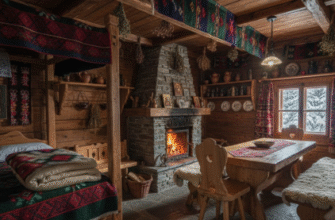
There’s a tactile honesty in contemporary Belarusian interiors that I think comes from exhaustion—exhaustion with fake wood laminate, with mass-produced sameness, with interiors that could exist anywhere. Designers are gravitating toward linen, raw wood (especially oak and pine), clay, and woven straw. Straw weaving, or slaminka, is a traditional craft that produced everything from beehive covers to Christmas ornaments, and now it’s showing up in pendant lamps, wall art, and even acoustic panels. I visited a café in Vitsebsk where the entire ceiling was a honeycomb of straw modules, absorbing sound and casting these incredible honeyed shadows. The owner told me it cost less than drywall and felt like “bringing the countryside into the city without the mud.” That last part made me laugh, but also—yeah. There’s a hunger for rootedness that doesn’t require moving to a village, for textures that carry memory without being costume-y.
Clay pottery is another throughline. Traditional Belarusian ceramics were utilitarian—crocks for pickling, jugs for kvass—but contemporary potters are making sculptural vessels, rough-edged plates, even tile work that references folk forms while refusing to replicate them exactly.
Color Palettes That Recieve Almost No Instagram Love But Should
Belarusian traditional color schemes are not subtle: red, white, black, and occasional blue or green accents. Red symbolized life, love, and protection; white was purity and light; black grounded everything, kept it from floating away. Modern interiors soften this—think terracotta, cream, charcoal—but the emotional temperature stays warm. I guess it makes sense in a climate where winter lasts half the year. You’re not going to paint your walls Scandinavian gray when November through March is already grayscale. Instead, there’s this embrace of ochre, rust, amber, colors that feel like stored sunlight. I’ve seen living rooms where one wall is deep crimson (a nod to traditional rushnik embroidery) and the rest are pale linen, and it doesn’t feel aggressive—it feels necessary, like a heartbeat in an otherwise quiet room.
Soviet Modularity Meets Slavic Maximalism in Furniture and Storage Solutions
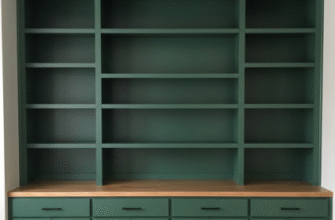
The tension between Soviet efficiency and Slavic decorative impulse is where things get interesting. Soviet furniture was modular by necessity—small spaces demanded flexibility—but it was also aesthetically austere. Contemporary Belarusian designers are keeping the modularity (fold-out desks, stackable stools, wall-mounted storage) but adding pattern, texture, and personal narrative. I saw a credenza in a Minsk design showroom that had traditional carved motifs routed into its birch plywood doors, but the overall form was pure mid-century modern. The designer told me she wanted “furniture that doesn’t apologize for being from here.” That phrase stuck with me. There’s a defiance in it, a refusal to flatten identity into globalized neutrality. Shelving units incorporate niches for icons or folk art; kitchen islands have built-in bread boxes (because bread is still sacred); even closets sometimes feature interior panels painted with protective symbols, invisible to guests but present nonetheless.
Why This Matters Beyond Belarus and What We Can Learn from Hybrid Design Languages
Belarusian interior design isn’t trying to be the next Scandinavian minimalism or Japanese wabi-sabi. It’s not packaged for export, not optimized for Pinterest. And maybe that’s exactly why it matters. In a design world increasingly dominated by algorithm-friendly aesthetics, here’s a tradition that prioritizes emotional continuity over visual virality, that layers past and present without smoothing out the contradictions. I think other post-Soviet countries—and honestly, any culture navigating the gap between tradition and modernity—could learn from this approach: heritage doesn’t have to be preserved in amber or discarded entirely. It can be a living, evolving material, as functional as plywood and as symbolic as a threshold blessing. Anyway, that’s what I took away from a month of sitting in Belarusian living rooms, drinking too much tea, and asking probably annoying questions about why someone would hang a horseshoe next to a Sonos speaker. Turns out, both are about creating good vibes. Just different frequencies.