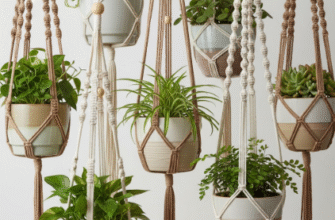
I used to think vertical gardens were just fancy Instagram props for people with too much time and money.
Then I moved into a 450-square-foot apartment in Brooklyn with exactly one window that got decent light, and suddenly the idea of growing anything—literally anything green—became this weird obsession. Turns out, when you’re staring at beige walls for the seventh consecutive month of winter, you’ll try pretty much anything. I started researching vertical garden systems, and here’s the thing: most of the advice out there assumes you have a balcony, or at least a wall you’re allowed to drill into, which—yeah, no. My landlord barely lets me hang pictures. But I found workarounds, and honestly, some of them work better than the expensive modular systems everyone raves about. The basic principle is simple: stack plants upward instead of outward, maximize whatever vertical space you’ve got, and don’t overthink the aesthetics until you’ve figured out if your plants will actually survive.
Wait—maybe I should back up. Vertical gardening isn’t new. People have been growing food on walls for centuries, give or take a few hundred years. The Hanging Gardens of Babylon, if they even existed, were basically an ancient vertical farm. Modern systems just use better materials—plastic instead of stone, LED grow lights instead of hoping the sun cooperates. The physics haven’t changed though: water still runs downward, roots still need oxygen, and plants still etiolate if you stick them in a dark corner and hope for the best.
Why Freestanding Towers Beat Wall-Mounted Panels Every Single Time
Here’s where I got it wrong initially: I bought one of those felt pocket wall hangers, the kind with twelve little slots for succulents. Looked great in the product photos. In my apartment, it turned into a mold factory within three weeks because the felt never dried out properly and the drainage was, let’s say, theoretical. Freestanding tower systems—the ones that look like weird vertical tubes with pockets cut into the sides—actually work because air circulates around them. I’m using a basic 5-tier model now that cost maybe sixty bucks, and it holds about twenty plants without requiring me to violate my lease. You fill the center column with soil or a growing medium, plant stuff in the side pockets, water from the top, and gravity does the rest. The runoff collects in a tray at the bottom, which you have to empty, but that’s way easier than scrubbing mold off your wall.
The best part? You can rotate the whole thing. My window faces east, so I spin the tower 180 degrees every few days to keep the growth even. Try doing that with a wall-mounted system.
Hydroponic Setups That Don’t Require Engineering Degrees to Operate
Hydroponics sounds complicated—like you need a degree in agricultural science and a bunch of pumps and timers and pH meters. Some systems are definitely like that. But there are passive hydroponic towers now that use wicking action instead of pumps, and they’re absurdly simple. You fill a reservoir with water and nutrients, the growing medium wicks moisture upward, and the plants just… grow. I tested one for basil and lettuce, and it worked fine until I forgot to refill the reservoir for ten days straight and everything died. User error, not system failure. The advantage over soil is that you don’t have to worry about drainage or overwatering—the plants take what they need. The disadvantage is that if you screw up the nutrient balance, you’ll know immediately because the leaves start looking weird and crispy. Also, hydroponic systems are usually uglier than soil-based ones. They tend to be made from white plastic and look sort of medical, which might not be the vibe you’re going for in your living room.
Lighting Situations That Actually Matter When You Don’t Have South-Facing Windows
Most vertical garden articles assume you have great natural light, which is hilarious if you live in a city where buildings are packed together like sardines. I definately don’t have great light. So I bought clip-on LED grow lights—the ones that look like desk lamps with purple bulbs—and mounted them on a tension rod I wedged between two bookshelves. It’s not pretty, but it works. Plants don’t care about aesthetics, they care about photons. You need lights that cover the full spectrum, ideally with separate red and blue LEDs, and you need them on for about 12-14 hours a day for most edible plants. Succulents and some herbs can survive on less. The purple glow turns your apartment into what looks like a grow-op, which my neighbors definitely noticed, but whatever. I’m growing oregano, not contraband.
One thing nobody tells you: LED grow lights generate less heat than old-school fluorescents, but they still generate some heat. In summer, running lights for half the day makes my apartment noticeably warmer. In winter, that’s a bonus. In July, not so much.
What Actually Grows Well Vertically Versus What You’ll Waste Time On
Lettuce, herbs, strawberries, spinach—those all work great in vertical systems because they have shallow roots and don’t get huge. I’ve harvested enough basil from my tower to make pesto weekly, which honestly feels like a minor miracle. Tomatoes are possible but annoying because they get heavy and need support structures, and cherry tomato varieties are the only ones that make sense space-wise. I tried growing peppers once, and the plants got leggy and produced maybe three sad little peppers over four months. Not worth it. Root vegetables are obviously a non-starter unless you’ve got really deep pockets in your system, and even then, why bother? The grocery store sells carrots for like a dollar a pound. The real win with vertical gardens in small apartments isn’t saving money on produce—it’s having fresh herbs whenever you want them and not feeling like you live in a concrete box with no connection to anything alive. That sounds cheesy, but it’s true. Also, watering plants is weirdly meditative when you’re stressed, which I guess makes sense if you think about it.
Maintenance Realities Nobody Mentions in the Glossy Setup Guides
Vertical gardens require more frequent watering than traditional pots because the drainage is aggressive and the exposed surface area means faster evaporation. I water mine every other day in summer, less in winter. You’ll also need to fertilize more often with soil-based systems because nutrients wash out quickly. I use a liquid fertilizer at half-strength every two weeks, which seems to work fine, though I’m sure there’s a more scientific approach I’m ignoring. Pests are less of an issue indoors, but fungus gnats show up if you overwater, and they’re incredibly annoying. I dealt with an infestation by letting the soil dry out completely between waterings for a couple weeks, which killed most of my lettuce but eliminated the gnats, so—trade-offs. The biggest maintenance hassle is actually rotating plants as they outgrow their spots. That basil that started as a tiny seedling? It’s now a bushy monster that’s crowding out the thyme next to it, and I have to reconfigure the whole tower layout every month or so. It’s like Tetris, but with living things that get mad if you handle them roughly.
Anyway, it’s worth it.