I used to think sunrooms were just glorified porches until I watched a realtor friend stage one in February and recieve three offers within forty-eight hours.
The buyers didn’t care about the vintage wicker furniture or the carefully positioned ferns—they cared about the light. Natural light, it turns out, triggers something almost primal in humans, a kind of biological nostalgia that real estate agents have quietly exploited for decades. Our circadian rhythms evolved over roughly 300,000 years to sync with daylight cycles, and when we walk into a sun-drenched room, our brains register safety, warmth, possibility. It’s why staging a sunroom isn’t really about furniture at all—it’s about amplifying what the space already does to our neurochemistry. I’ve seen buyers literally pause mid-sentence when they step from a dim hallway into a room flooded with afternoon sun, their pupils contracting, their cortisol levels probably dropping without them realizing it. The light does the selling. You just have to avoid screwing it up.
Here’s the thing: most people stage sunrooms like they’re staging living rooms, which is exactly backwards. They add too much stuff—bookshelves, heavy curtains, dark rugs—basically anything that competes with or blocks the light. I guess it makes sense if you think staging means “fill the space,” but sunrooms operate on different rules. The goal is to make the light feel abundant, almost excessive, like the room is overflowing with it.
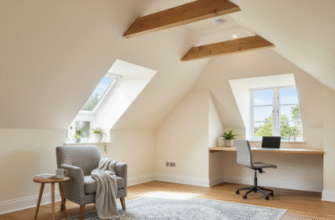
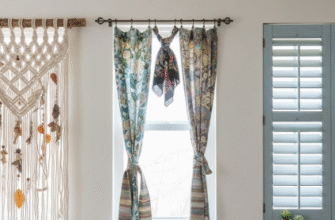
Strip away anything that absorbs light instead of reflecting it, and suddenly the space feels twice as large. Pale linen cushions, glass-top tables, mirrors angled to bounce sunlight into corners—these aren’t decorative choices, they’re optical strategies. One stager I know in Portland uses sheer white panels not to block the view but to diffuse harsh afternoon glare, turning direct sun into this soft, even wash that makes the whole room feel like it’s glowing from within. Wait—maybe that sounds too poetic, but I swear it works. Buyers walk in and they don’t see a room, they see a mood.
The science backs this up, sort of.
Studies on workplace productivity and hospital recovery times consistently show that access to natural light improves mood, focus, and even healing rates—though the exact mechanisms are still debated among chronobiologists. Some researchers argue it’s mostly about vitamin D synthesis and melatonin suppression; others think it’s tied to evolutionary preferences for open, sunlit environments where predators were easier to spot. Either way, when you stage a sunroom to maximize light, you’re tapping into something deeper than aesthetics. You’re staging a feeling. And feelings, as any good realtor will tell you, close deals faster than granite countertops.
Position seating to face the windows, not away from them. Use plants sparingly—too many create shadows and clutter; three or four strategically placed succulents or trailing pothos are enough to suggest life without blocking sightlines. Avoid dark wood furniture, which sucks up photons like a black hole. Honestly, I’ve seen sunrooms staged with charcoal-gray sectionals and walnut credenzas, and they always feel like caves pretending to be greenhouses.
Timing matters too, obviously. Schedule showings between 10 a.m. and 3 p.m. when the sun is highest, unless your sunroom faces west—then late afternoon is your golden hour, literally. I watched a seller in Asheville insist on evening showings because she thought the sunset views were the selling point, but the room felt dim and cold by 5 p.m., and she ended up dropping the price twice before switching to midday appointments. The light has to be there when buyers are there, or you’re just showing them a room with windows.
One last thing, and maybe this contradicts what I said earlier, but sometimes a single bold element—a bright yellow throw pillow, a cobalt vase—can actually enhance the light by giving the eye something to anchor on, a reference point that makes the surrounding brightness feel even more pronounced. It’s counterintuitive, but color theory suggests that contrast amplifies perception. Or maybe I’m overthinking it. Either way, the light is the star—everything else is just stage direction.