I used to think attics were just places where Christmas decorations went to die.
Then I walked through a staged attic conversion in Portland last spring, and honestly, it scrambled my entire understanding of what unused space could become. The homeowner had transformed maybe 400 square feet of cramped, dust-choked storage into what looked like a legitimate studio apartment—complete with a Murphy bed, a tiny kitchenette, and windows I didn’t even know existed up there. The listing agent told me they’d had three offers within 48 hours, each one higher than asking. Turns out, buyers don’t just want to see empty attics with good bones anymore; they want to see the life that could happen there, staged and styled and almost embarrassingly real. It’s not enough to point at exposed beams and say “imagine the possibilities.” People need the possibilities handed to them, fully furnished, with throw pillows that match.
Here’s the thing: staging an attic conversion isn’t like staging a living room. You’re not just arranging furniture—you’re teaching people how to think about vertical space differently. Most buyers walk into attics expecting cobwebs and maybe a haunted rocking chair. They don’t expect to find a cozy reading nook or a functional home office.
Transforming the Psychological Ceiling Into an Actual Living Environment
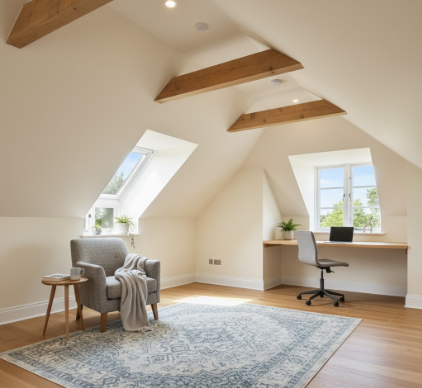
The first challenge is convincing people that low ceilings won’t crush their souls. I’ve seen agents stage attic spaces with strategic furniture placement—low-profile beds, floor cushions, mid-century modern pieces that hug the ground. One designer I spoke with in Austin swears by using horizontal lines everywhere: long, lean bookshelves, wide dressers, anything that draws the eye sideways instead of up. She also lights the hell out of these spaces—layered lighting, she calls it, with recessed fixtures, wall sconces, and about seven different lamps. It tricks the brain into feeling like there’s more air, more room to breathe. The science here is a little fuzzy, but something about how our visual cortex processes spatial volume when light sources multiply—give or take some neuroscience I only half understand. Anyway, it works. Buyers walk in expecting claustrophobia and instead feel weirdly expansive.
Another trick: showing function instead of talking about it. Don’t just say “this could be a guest room”—stage it as a guest room, with luggage tucked under the bed and a stack of books on the nightstand. Make it lived-in, almost uncomfortably so.
Navigating the Structural Realities That Most Stagers Conveniently Ignore
Wait—maybe I should mention that not every attic can actually become livable space. Building codes vary wildly by region, but most places require at least 7 feet of ceiling height over a minimum percentage of floor area, plus egress windows for fire safety, proper insulation, and HVAC that doesn’t just recirculate stale air. I’ve toured attic conversions that looked gorgeous but definitely wouldn’t pass inspection if you actually tried to rent them out or claim them as bedrooms on an appraisal. Stagers sometimes skirt this by calling the space a “bonus room” or “flex space,” which is real estate speak for “we’re not making any legal promises here.” If you’re selling a home with a staged attic, make sure you’re transparent about what’s permitted versus what’s aspirational. Buyers can get litigious when they realize that dreamy studio can’t legally be called a bedroom.
The Furniture Choices That Make or Break Spatial Believability
Scale is everything. I mean everything. A full-size sectional in a 300-square-foot attic makes the whole space feel like a furniture showroom got stuck in an elevator. Instead, go for apartment-sized sofas, nesting tables, wall-mounted desks that fold away. One stager in Brooklyn told me she uses kids’ furniture sometimes—not because it’s cute, but because a slightly smaller armchair or a narrower console table can make an attic feel proportional instead of cramped. She also swears by mirrors, which every staging guide ever written will tell you, but up in an attic with angled walls, mirrors can do weird, fun things with light and perspective. Just don’t overdo it—too many mirrors and it starts feeling like a funhouse.
Textures matter too, maybe more than color. Soft rugs, linen curtains, woven baskets—they make a space feel finished and human, not like a staged set.
Why Buyers Need to See the Mess to Believe the Potential
Here’s where it gets counterintuitive: perfectly staged spaces can feel sterile, almost unbelievable. I’ve noticed that attic conversions staged with a little bit of mess—a throw blanket draped over a chair, a coffee mug on a side table, a yoga mat half-rolled in the corner—actually perform better in showings. It’s like buyers need permission to imagine themselves being imperfect up there. Too polished, and it feels like a museum. Too messy, and it feels like a storage unit with delusions. The sweet spot is somewhere in between: lived-in but aspirational, cozy but not claustrophobic. One agent I talked to in Seattle stages attic offices with a laptop open on the desk, a half-finished puzzle on a card table, even a pair of slippers by the door. It sounds gimmicky, but buyers spend more time in those spaces, taking photos, picturing their own routines.
The Lighting and Temperature Tricks That Actually Make People Stay Longer
Attics are notorious for being either freezing or unbearably hot, depending on the season. If you’re staging one, address this upfront—bring in a portable heater or a standing fan, and make sure it’s visibly running during showings. It signals that the space is conditioned, not just decorated. Lighting, again, is non-negotiable. Natural light is ideal, but if your attic only has one small window, supplement aggressively with warm-toned LEDs. Avoid overhead lighting that casts harsh shadows on those sloped ceilings—it’ll make the space feel even smaller. Instead, use uplighting to wash the walls and ceiling in soft light, which (I guess) tricks the brain into perceiving more volume. I read somewhere that humans subconciously judge room size by how much of the ceiling they can see clearly, but I can’t remember where, so take that with a grain of salt.
Anyway, the point is: staged attic conversions sell because they solve a narrative problem—they turn forgotten space into something buyers can emotionally invest in.