I used to think Mexican hacienda design was just about terracotta tiles and wrought iron, but then I walked into a restored 18th-century estate outside Guanajuato and realized I’d been missing the entire point.
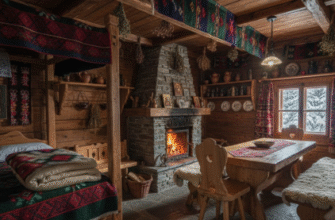
The thing about authentic hacienda interiors—the ones that haven’t been sanitized for Instagram—is they’re built on contradictions that shouldn’t work but somehow do. You’ve got these massive wooden vigas running across ceilings that are easily twelve, maybe fifteen feet high, rough-hewn beams that still show axe marks from craftsmen who died two centuries ago, and beneath them you’ll find hand-painted Talavera tiles so delicate they look like they’d shatter if you breathed wrong. The walls are thick, sometimes three feet of adobe that keeps rooms cool even when it’s pushing 95 degrees outside, plastered in shades that range from burnt sienna to that specific ochre yellow you can’t quite replicate with modern paint because it comes from local clay deposits. There’s this weighted silence in these spaces, punctuated by the occasional creak of antique doors with their original hardware—iron hinges forged by hand, locksets that require keys the size of your palm. The floors might be saltillo tile worn smooth in pathways where generations walked, or wide planks of mesquite that have darkened to nearly black in high-traffic areas. And here’s the thing: none of it feels precious or untouchable, which is maybe why it works.
Honestly, the color palette throws people off because it’s simultaneously bold and earthy. We’re talking deep reds pulled from cochineal dye, cobalt blues that show up in tilework and painted furniture, those warm terracottas that aren’t just one shade but dozens depending on firing temperature and clay source. I’ve seen rooms where a single wall is painted a saturated turquoise that would feel aggressive in a modern space, but surrounded by dark wood furniture and natural fiber textiles it somehow reads as restful—wait, maybe restful isn’t right, more like grounding.
How Architectural Elements Create Drama Without Trying Too Hard
The arches are everywhere, and not the wimpy decorative kind. These are structural—thick, load-bearing curves in doorways and corridors, sometimes left as exposed brick or stone, other times plastered smooth. They frame views between rooms in a way that makes you conscious of moving through space, transitioning from one zone to another. Wooden doors are oversized, often double-height with decorative nail heads arranged in geometric patterns, and they’re heavy enough that opening one requires actual effort. The windows present this interesting problem: they’re small relative to wall space because, you know, keeping heat out in a pre-air-conditioning era, but they’re recessed deep into those thick walls, creating these sculptural niches that catch light at specific angles throughout the day. Some haciendas have interior courtyards—open-air atriums with central fountains where the sound of water bounces off surrounding walls, and you’ll find potted plants, maybe bougainvillea climbing up columns, definitely some citrus trees. The whole effect is about mass and shadow, solid and void.
Furniture and Decor That Looks Like It Has Stories to Tell
The furniture tends toward heavy and dark.
Spanish colonial pieces made from mesquite, pine, or cedar with minimal ornamentation—straight lines, thick legs, mortise-and-tenon joinery you can see. There’s usually at least one massive dining table that could seat twelve comfortably, surrounded by chairs with leather seats and backs, the leather often tooled or studded. Storage pieces like armoires and trasteros (cupboards with spindle doors) are common, frequently painted or carved with folk motifs—flowers, birds, geometric patterns that hint at indigenous influence. Wrought iron shows up in everything: light fixtures that hang from chains, candelabras, bed frames, drawer pulls, window grilles with scrollwork that casts complicated shadows on walls. Textiles add softness but in a restrained way—wool serapes draped over chair backs, cotton or linen cushions in natural tones, maybe a cowhide rug. The ceramics are where you get decorative exuberance: Talavera platters displayed on walls, pottery vessels in niches, hand-painted sinks in kitchens and bathrooms. Religious imagery is almost unavoidable—crucifixes, santos (carved saint figures), retablos (devotional paintings on tin or wood)—which makes sense given the hacienda system’s historical ties to the Catholic Church. I guess it reminds you these weren’t just aesthetic choices but reflections of a specific cultural and economic reality, one that was often brutal despite producing beautiful spaces.
Why This Style Feels Relevant Again Despite Its Complicated History
There’s been this resurgence in hacienda-inspired interiors, particularly in the southwestern United States, and I think it’s partly a reaction against the sterile minimalism that’s dominated for the past decade. People want texture, weight, evidence of human hands—all things hacienda design delivers in abundance. But here’s where it gets uncomfortable: the hacienda system was built on exploitation, initially through encomienda labor and later through debt peonage that kept workers tied to estates for generations. So when we talk about adapting this aesthetic, we’re cherry-picking elements from a system that was fundamentally unjust, and that’s worth acknowledging even as we admire the craftsmanship. Modern interpretations tend to soften things, lighten the palette slightly, maybe incorporate more windows or open up floor plans in ways that would’ve been structurally impossible with original building techniques. You might see someone pair traditional vigas with contemporary furniture, or use Talavera tile as an accent rather than covering entire surfaces. The key—I think—is maintaining that sense of solidity and authenticity, not turning it into a theme park version where everything’s too clean and coordinated. The best spaces feel like they’ve been lived in, accumulated over time, with imperfections that add character rather than detract from it.
Anyway, that’s the core of it—bold without being loud, rustic without feeling unrefined, elegant in a way that doesn’t announce itself. It’s definately not for everyone, but for those who connect with it, the style offers something increasingly rare: a sense of permanence in a world that feels disposable.