
I used to think nomadic design was just about throwing some felt and embroidery on everything and calling it authentic.
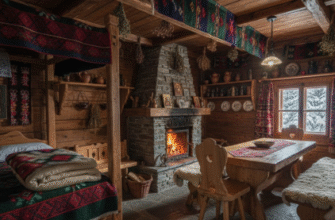
Then I spent three weeks in Almaty talking to interior designers who were pulling apart their grandmothers’ yurts—literally disassembling the lattice frames, the tunduk roof rings, the felt panels—to understand how Kazakh spatial logic actually worked, and I realized I’d been looking at this completely wrong. These weren’t just aesthetic choices. The way a traditional Kazakh家 was organized, with its circular flow and its directional meanings (guests to the left of the entrance, family to the right, the hearth dead center), came from centuries of living on the steppe where your home needed to pack onto a camel and withstand winds that could, I don’t know, probably knock over a small car. The materials weren’t decorative—they were survival technology. Felt insulates against temperatures that swing from 40°C in summer to -40°C in winter, give or take a few degrees depending on which part of Kazakhstan you’re in. The geometric patterns on shyrdaks (those thick felted rugs) weren’t just pretty; they carried symbolic weight, clan identifications, protection motifs that I’m honestly still trying to fully understand because every elder I talked to had a slightly different interpretation.
Here’s the thing: modern Kazakh designers aren’t trying to recreate museum pieces. They’re extracting principles. Curved lines instead of hard corners. Layered textiles that you can add or remove depending on season. Low seating that creates intimacy.
How Steppe Landscapes Acutally Dictate Contemporary Color Palettes and Material Choices
Walk into a high-end Almaty apartment designed by someone like Aida Kamalova or Symbat Bauyrzhan, and you’ll see this immediate thing: the colors are never just “earth tones.” They’re specifically steppe tones—the pale ochre of summer grass burned by the sun, the deep charcoal of distant mountains, the shocking turquoise that shows up in traditional jewelry and, weirdly enough, in the exact shade of sky you get at high altitude on a clear October afternoon. I’ve seen designers pull color samples from photographs of the Charyn Canyon, from the Altai foothills, from the way light hits snow in the Tian Shan range. One designer told me she spent six months just studying how shadows fall differently on the flat steppe versus in the city, and how that should affect her use of ambient lighting. Which sounds obsessive until you see the result and realize—wait, maybe this is why the space feels so calm? The materials follow the same logic: lots of untreated wood (usually pine or birch, native species), stone (often that gorgeous streaked marble from the Jambyl region), metals that patina naturally (copper, bronze, not the shiny stuff). There’s this rejection of synthetic perfection that feels very now, very aligned with global sustainability trends, but it’s actually rooted in a nomadic practicality where you used what the land gave you and you didn’t fight it.
Anyway, it’s not all romantic.
Some designers complain that clients want the “nomadic look” but freak out if you suggest they sit on floor cushions or give up their massive sectional sofa. There’s tension between honoring heritage and living in a modern city where, let’s be honest, you’re not breaking down your home twice a year to follow livestock. I met one architect who was trying to incorporate the yurt’s radial symmetry into a rectangular Soviet-era apartment block, and he looked exhausted—said he’d been revising the plans for eight months because the structural walls wouldn’t cooperate and his client kept asking if they could add “more Instagram moments.” Which, I guess, is its own kind of cultural evolution, but it felt a bit sad. The best projects seem to be the ones that don’t try too hard, that let nomadic principles inform decisions without turning into theme parks. A circular dining table instead of rectangular. Textiles that tell a story but don’t scream “look how ethnic I am.” Flexible spaces that can shift function, just like a yurt interior shifted depending on whether you were hosting a wedding or sheltering from a storm.
Why European Minimalism Keeps Failing When Designers Try to Force It Into Kazakh Spatial Logic
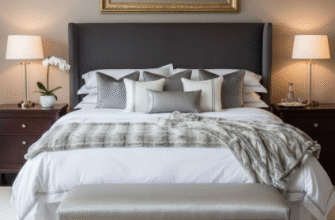
Turns out, Scandinavian minimalism and Kazakh nomadic design are not as compatible as Pinterest would have you beleive.
I watched this play out in real time when a developer tried to import a Danish design firm to do luxury apartments in Astana, and the results were—well, they were cold. Beautifully cold. The Danish team kept stripping things down, removing layers, going for that hygge emptiness, but Kazakh domestic space has always been about abundance within structure, about layering textiles and objects and meanings, about walls that tell stories through what’s hung on them. The feedback from Kazakh buyers was consistent: it felt sterile, unwelcoming, not like a home. One woman told me it reminded her of a hospital. The issue wasn’t quality—it was cultural mismatch. Nomadic heritage brings a different relationship to space: it’s communal (even private rooms are designed with guests in mind), it’s tactile (you’re supposed to touch things, sit on the floor, interact physically with your environment), and it’s spiritually oriented (directions matter, thresholds matter, the center of the room matters). European minimalism, especially the Nordic kind, is more about individual retreat, visual calm, reduction. When you try to merge them without understanding the underlying philosophies, you get spaces that look good in magazines but feel wrong in your body. The designers who’ve cracked this—and there are a few, mostly Kazakh-born folks who studied abroad and came back—they’re not doing fusion. They’re doing translation, finding where the principles overlap (both value natural materials, both respect craftsmanship, both avoid clutter) and letting the differences coexist rather than smoothing them out. It’s harder work, definitely more complicated than just picking a mood board, but the results actually feel like places where humans would want to live.