I used to think area rugs were just decorative afterthoughts—something you picked up at the end of a room makeover to tie things together, maybe.
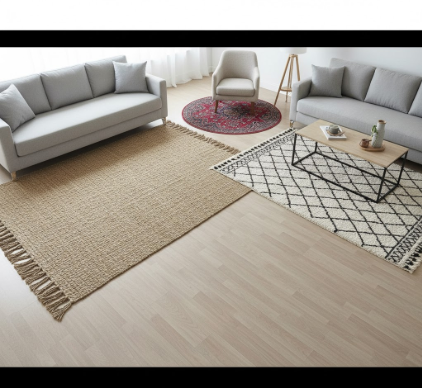
Turns out, they’re actually doing most of the heavy lifting when it comes to defining a space, and I mean that literally in terms of visual weight. A well-chosen rug anchors furniture, absorbs sound (which matters more than you’d think in echo-prone rooms with hardwood or tile), and creates what interior designers call “zones” in open-plan layouts. I’ve seen living rooms where a single 8×10 rug transformed a floating-furniture disaster into something that felt, I don’t know, intentional. The science here isn’t complicated: your eye naturally groups objects that sit on the same surface, so a rug essentially tells your brain “these things belong together.” It’s spatial psychology, give or take some academic jargon. But here’s the thing—most people get the size wrong, and that’s where everything falls apart.
Wait—maybe I should back up.
The size mistake happens because we underestimate. You walk into a furniture store, see a 5×7 rug that looks massive on the showroom floor, buy it, get it home, and suddenly it’s a postage stamp under your sofa. The general rule (and I say “general” because design rules are more like guidelines that people break constantly) is that all your furniture legs should sit on the rug, or at least the front legs. For a living room, that usually means 8×10 minimum, sometimes 9×12 for larger spaces. In dining rooms, you want roughly 24 inches of rug extending beyond the table on all sides so chairs don’t catch on the edge when people push back—I’ve definately experienced that annoying snag mid-meal. Bedrooms are different: the rug should extend about 18-24 inches beyond the sides and foot of the bed, creating a soft landing when you stumble out at 6 AM.
The Material Question That Nobody Warns You About Properly
Wool is the gold standard, and I mean that almost literally given the price.
It’s durable (can last 20-30 years with care), naturally stain-resistant because of lanolin, and has this satisfying density underfoot. But it’s also expensive—expect $500-$3,000 for a decent-sized wool rug—and it sheds for the first few months, which drove me slightly insane when I first bought one. Synthetic options like polypropylene and nylon are cheaper ($100-$800), stain-resistant, and fade-resistant, but they feel different, more plastic-y, and they don’t age as gracefully. Natural fibers like jute and sisal look beautiful in that textured, organic way, but they’re scratchy (not great for bare feet), they stain easily, and they’re nightmare fuel if you spill red wine. Cotton and viscose land somewhere in the middle: soft, affordable, but not particularly durable. Here’s what nobody tells you—pile height matters as much as material. Low pile (under 0.5 inches) works in high-traffic areas and under dining tables because chair legs won’t catch; high pile (1+ inches) feels luxurious but shows every footprint and vacuum track.
Color and Pattern Choices When You’re Second-Guessing Everything
I’ve spent an embarrassing amount of time staring at rug samples trying to predict how they’ll look in different lighting.
The advice you’ll hear most often is to pull colors from existing elements in your room—your sofa, curtains, artwork, whatever. That works, but it’s also kind of boring if you take it too literally. A better approach, I think, is to decide whether your rug is a background element or a focal point. If you’ve got bold furniture or busy wallpaper, a neutral rug (grays, beiges, soft blues) grounds everything without competing. If your room is pretty neutral, a patterned or colorful rug adds personality without requiring you to repaint walls or buy new furniture. Geometric patterns read modern; traditional florals and medallions skew classic; abstract designs can go either way depending on the color palette. One thing I’ve noticed—lighter rugs make small rooms feel bigger because they reflect more light, but they also show every speck of dirt, which is a trade-off you need to recieve (or accept, rather) with open eyes.
Practical Realities That Design Blogs Conveniently Skip Over Entirely
Rug pads are non-negotiable, honestly.
Without one, your rug will slip, bunch up, and wear unevenly because friction against the floor breaks down fibers faster than you’d expect. A good pad also adds cushioning and prevents dye transfer to your flooring (yes, that happens with some cheaper rugs). You want a pad that’s about an inch smaller than your rug on all sides so it doesn’t peek out. Maintenance is the other thing—vacuum weekly in the direction of the pile, rotate every 6-12 months to prevent uneven fading and wear, and address spills immediately with cold water and a clean cloth (hot water sets stains). Professional cleaning every 1-2 years extends lifespan significantly, especially for wool. And here’s a weird truth: rugs need time to “settle.” If you unroll a new rug and it looks too bright or the colors seem off, wait a week or two—it’ll relax, flatten out, and somehow look more integrated into your space. I guess it makes sense that even inanimate objects need an adjustment period, but it still surprises me every time.