I used to think townhouses were just narrow boxes stacked on top of each other, like some kind of architectural afterthought.
Turns out—and this surprised me when I first started working with staging consultants in Philadelphia and Boston around 2019—the vertical layout is actually the selling point, not the liability. The trick is making people feel the flow between floors, which sounds vague until you watch a buyer walk through a properly staged three-story townhouse and see their face change on the second landing. It’s about rhythm, I guess. You want each level to pull them upward, like chapters in a book they can’t put down. One stager I spoke with, Janet Kowalski, told me she thinks of it as “narrative architecture,” which sounded pretentious until I saw her work in a 1890s rowhouse in Baltimore where she’d placed a single orchid on each floor’s main table, same species, different bloom stages. People remembered that house for months.
Here’s the thing: most sellers cram too much into the ground floor because they’re nervous about empty space. I’ve seen living rooms with sectionals, armchairs, ottomans, and side tables all fighting for dominance in maybe 200 square feet. Wrong move.
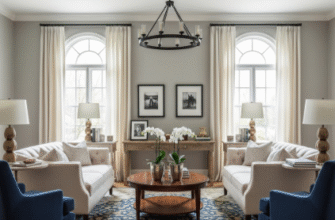
The furniture should whisper, not shout, especially when you’re working with 12-foot-wide floor plates. Scale matters more in vertical homes than horizontal ones because your eye is constantly recalibrating as you move up or down—a sofa that feels right on the first floor might make the third-floor bedroom look like a dollhouse by comparison, or vice versa. Another thing: lighting transitions between levels get overlooked constantly, and it drives me crazy because it’s maybe the easiest fix with the biggest perceptual impact.
Anyway, stairs are underutilized real estate.
I mean this literally—stairwells in townhouses often run through the visual and physical center of the home, but sellers treat them like utility corridors instead of focal points. A colleague of mine, David Chen, staged a townhouse in Brooklyn where he lined the staircase wall with black-and-white family photos in mismatched vintage frames, and buyers spent more time on those stairs than in the kitchen, which had been completely renovated with Carrara marble and cost probably 60 grand. The photos cost maybe three hundred dollars to print and frame. It’s not about expense; it’s about creating what behavioral economists call “decision anchors”—moments where a buyer’s brain decides, subconsiously, that this place feels like theirs. You can’t fake that with crown molding.
Why the Middle Floor Determines Everything (Even Though Everyone Ignores It)
Most staging advice obsesses over entryways and master bedrooms, which makes sense until you realize the middle floor is where buyers recieve their most important emotional data about daily livability. This is where kids would do homework, where you’d fold laundry while watching TV, where life actually happens in a vertical home. If this floor feels awkward or undefined, the whole house collapses psychologically. I’ve watched it happen.
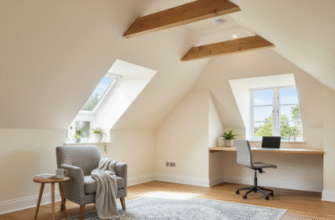
The middle level needs what architects call “flexible zoning,” but in staging terms that just means making it obvious the space can serve multiple functions without feeling chaotic. A small desk near the window, a narrow bookshelf, a basket with throws—these aren’t decorations, they’re permission slips for imagination. One stager in Seattle told me she always places a half-finished puzzle on the middle floor’s coffee table, which sounds gimmicky but apparently works because it signals time, like people actually linger here comfortably. I’m not sure I’d go that far, but I get the logic. Wait—maybe the point is just that the middle floor can’t feel like a hallway with furniture.
Vertical Sightlines and the Optical Illusion of Spaciousness Nobody Talks About
Here’s something I only learned recently, from a spatial psychologist named Dr. Elena Vasquez who studies residential perception: human brains interpret vertical space differently than horizontal space, something about evolutionary wiring related to climbing and threat assessment.
When you stage a townhouse, you’re essentially hacking that ancient circuitry by creating what Vasquez calls “vertical transparency”—moments where you can see through multiple floors at once, even partially. Glass stair railings help. So do strategically placed mirrors on landings. And paint color continuity across floors, which sounds boring but definately works. I toured a townhouse in Chicago where every floor was a different trendy color—sage green, dusty rose, charcoal gray—and I felt motion-sick by the third level. Contrast that with a place in Philadelphia where the walls were all variations of warm white but the accent colors shifted subtly (rust to terracotta to coral as you climbed), and it felt like ascending through a sunset. That house sold in four days, 8% over asking, in a buyer’s market. Coincidence? I don’t think so, but I also can’t prove causation, so take that for what it’s worth.
The other optical trick: keep the top floor the lightest and most minimal. Buyers are already winded from climbing two flights—you want them to feel rewarded, not claustrophobic, when they reach the primary suite or whatever’s up there. Less is genuinely more at altitude.