
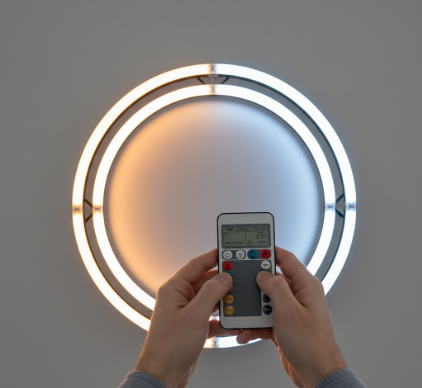
I used to think lighting was just about flipping a switch.
Then I started staging homes for sale, and I realized that the difference between a house that sits on the market for months and one that gets offers in a week often comes down to something as subtle as whether the bulbs are throwing off a yellowish 2700K glow or a crisp 5000K daylight tone. The temperature of your lighting—measured in Kelvins, which sounds more scientific than it needs to be—affects how potential buyers perceive every surface in a room. Warmer tones, around 2700-3000K, make spaces feel cozy but can also make them feel smaller and older, especially if you’re trying to sell a place that already has dark wood paneling or cramped rooms. Cooler tones, in the 4000-5500K range, open things up, make whites look whiter, and give the impression of cleanliness and modernity. But here’s the thing: go too cool, and you end up with that harsh hospital waiting room vibe that makes people want to leave immediately. It’s a balance, and honestly, most people get it wrong the first time.
Anyway, brightness is the other half of the equation, and it’s where things get messy. Lumens measure actual light output, but most homeowners still think in terms of wattage because that’s what we grew up with. A 60-watt incandescent bulb puts out roughly 800 lumens, give or take, but now with LEDs you can get that same brightness for 8-10 watts.
The Psychology of Layered Light and Why One Overhead Fixture Will Definately Kill Your Sale
Wait—maybe I should back up. When I walk into a staged home, the first thing I notice is whether there’s layered lighting or just one sad ceiling fixture doing all the work. Layered lighting means you’ve got ambient light (overhead), task lighting (lamps on desks or counters), and accent lighting (spotlights on artwork or architectural features). This creates depth, and depth creates interest, and interest creates emotional attachment. I’ve seen buyers fall in love with a house because the living room had a warm table lamp casting shadows on a textured wall, making the whole space feel lived-in and aspirational at the same time. On the flip hand, relying solely on a single overhead light flattens everything, washes out colors, and makes rooms feel institutional. You want brightness, sure—around 1500-3000 lumens for a living room, depending on size—but you want it distributed across multiple sources. Floor lamps, sconces, under-cabinet LEDs in the kitchen, even a strand of Edison bulbs if you’re staging a loft. The goal is to eliminate harsh shadows while still maintaining contrast.
Turns out, dimmer switches are underrated. They let you adjust intensity for different times of day, which matters more than you’d think when you’re scheduling showings.
How Color Rendering Index Impacts Buyer Perception Even Though Nobody Knows What It Is
I guess most people have never heard of CRI, or Color Rendering Index, but it’s kind of a big deal if you’re trying to make a home look its best. CRI measures how accurately a light source renders colors compared to natural sunlight, on a scale from 0 to 100. Anything above 90 is considered excellent, and that’s what you want in spaces where finishes matter—kitchens, bathrooms, bedrooms. Low-CRI bulbs, like some cheap LEDs or fluorescents, can make skin tones look sickly, wood floors look orange, and white walls look dingy. I’ve walked into homes where the staging was perfect—furniture arranged just right, fresh flowers on the table—but the lighting had a CRI in the 70s, and everything just felt off. Buyers couldn’t articulate why they didn’t like the space, but they didn’t. You can find the CRI rating on the bulb packaging, usually tucked in the fine print next to lumens and Kelvin temperature. Invest in bulbs rated 90+ for main living areas, and you’ll notice an immediate improvement in how materials and textures photograph, which matters because most buyers see your listing photos before they ever step foot inside.
Here’s the thing, though: matching color temperatures across a room is weirdly hard.
The Practical Nightmare of Mixing Bulb Types and Why Consistency Matters More Than Perfection
Honestly, I’ve been in houses where the kitchen had cool white LEDs in the ceiling, warm incandescents in the pendant lights, and daylight CFLs under the cabinets, and it looked like three different rooms stitched together. The human eye is sensitive to these shifts, even if we don’t consciously register them, and the result is visual chaos that reads as carelessness. When staging, aim for consistency within each room—pick a color temperature and stick with it. You can vary between rooms if it makes sense contextually (cooler in bathrooms and kitchens, warmer in bedrooms), but within a single space, uniformity creates harmony. That said, perfection isn’t the goal. Sometimes a slightly warmer lamp in the corner of a living room adds character, and that’s fine. The goal is to avoid jarring contrasts that pull attention away from the architecture and furnishings. Also, replace any burnt-out bulbs before showings—sounds obvious, but I’ve seen million-dollar listings with a dead bulb in the entryway chandelier, and it’s the kind of small detail that makes buyers wonder what else has been neglected.