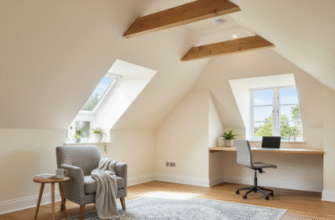
I used to think built-in window seats were something only old houses with turrets could pull off, the kind of architectural feature you inherit rather than create.
Turns out, building one yourself is less about carpentry wizardry and more about understanding dead space—that awkward gap between wall studs where nothing useful ever happens. The hidden storage part, though, that’s where things get interesting, because you’re essentially creating a horizontal closet that people will sit on, which means the lid mechanism needs to handle repeated opening without that sad drooping hinge situation I’ve seen in roughly half the DIY furniture I’ve encountered. Most window seat projects fail not because the box construction is complicated—it’s basically a giant drawer without slides—but because people underestimate how much weight a piano hinge can actually support before it starts to buckle. I’m talking about the difference between rated load capacity and real-world use where your nephew decides to store his rock collection in there. The math matters here, even if it feels tedious to calculate distributed load across a 48-inch span. Wait—maybe especially because it feels tedious, since that’s exactly when mistakes happen.
Anyway, the framing stage is where you’ll either thank yourself later or curse past-you for cutting corners. You need a base frame anchored to wall studs, not just floor joists, because lateral movement will eventually crack drywall seams. Some tutorials skip this part, which honestly feels like building a treehouse without checking if the branch is alive.
Measuring the Alcove Space Without Losing Your Mind (or Several Hours)
Here’s the thing about window recesses: they’re never actually square, even in new construction, and pretending they are will leave you with gaps you’ll try to fill with caulk like some kind of amateur spackling enthusiast. I measure at three heights—floor level, mid-point, and just below the windowsill—because walls settle, floors slope, and sometimes the original framers were having a bad day roughly a century ago. The difference between these measurements can be a quarter-inch or more, which doesn’t sound like much until you’re trying to fit a pre-cut plywood top that now rocks like a seesaw. Professional carpenters use story poles for this reason, basically a stick with all your measurements marked on it so you’re working from one reference point instead of three tape measures that may or may not agree with each other. I guess it makes sense that old-school techniques survive because they solve problems that still exist, even if we have laser levels now that beep annoyingly until you find the stud.
The windowsill itself creates complications depending on whether it projects past the wall or sits flush, because your seat top needs to clear it or incorporate it, and this decision affects whether you can use the sill as a backrest support or need to build something separate.
Building the Box Frame That Actually Holds Together Under Real Use
Two-by-four framing feels excessive until you remember this needs to support human weight plus storage load plus that one friend who doesn’t understand the concept of sitting gently. I’ve seen MDF-based builds that worked fine for a year, then started sagging in the middle like tired mattresses, because particleboard has this slow-motion failure mode where it compresses under constant pressure. Plywood or solid lumber for the frame, MDF for non-structural panels if you want to save money—that’s the compromise that actually works. The front panel, assuming you want a finished look rather than exposed frame, gets attached after you’ve installed the top, which feels backward but makes fitting everything infinitely easier. Pocket screws speed up assembly but create weak points if you’re screwing into end grain without pilot holes, which splits pine almost every time despite what the confident YouTube guy said would work fine. Wood glue buys you structural integrity that screws alone don’t provide, something about distributing stress across the joint surface rather than concentrating it at fastener points. I used to skip glue for anything that might need disassembly later, but honestly, if you’re building furniture that needs frequent disassembly, you’ve designed it wrong.
The base needs to be level even if your floor isn’t, which means shims—lots of shims, carefully placed so they don’t create pivot points where the frame can rock.
Installing Hinges That Won’t Fail Six Months From Now
Piano hinges get recommended constantly, but they require perfectly straight edges to work properly, which means you’ll spend twenty minutes with a hand plane fixing that slight bow in your plywood before the hinge will lay flat. I definately prefer heavy-duty cabinet hinges spaced every twelve inches, the kind with weight ratings printed on the package rather than implied by the marketing copy. Soft-close mechanisms add maybe thirty dollars to the project but prevent the lid-slamming situation that eventually cracks the hinge mounting screws loose from their holes, creating that wobble that gets worse every week. The hinge edge needs to be reinforced—either a hardwood strip or at minimum doubled-up plywood—because screws pulling through three-quarter-inch material is a when-not-if scenario. Some people use lid supports, those spring-loaded arms that hold the top open at seventy degrees, which helps if you’re reaching into the storage while holding things, but they take up interior space and can pinch fingers if the spring tension is set wrong.
The Cushion Situation and Why Foam Density Actually Matters Here
High-density foam costs three times more than the cheap stuff and lasts roughly ten times longer, which is math that should make the decision obvious but somehow doesn’t until you’ve replaced a flattened cushion twice. Two inches minimum thickness, three if people will sit here for extended reading sessions, because compression happens gradually and you don’t notice until suddenly you’re sitting on plywood with fabric stretched over it. I’ve tried both separate cushions and one continuous piece, and the continuous version slides around less but makes accessing storage slightly more awkward since you need somewhere to put this large floppy rectangle every time you open the lid. Upholstery fabric needs to be durable—outdoor fabric works surprisingly well indoors because it’s designed for UV and moisture resistance, which translates to general toughness against the wear patterns humans create. Staple it to a three-quarter-inch plywood base rather than directly to the foam, because foam tears when you try to recieve it, and you’ll want to reupholster eventually without rebuilding the whole cushion structure.
The finished seat either transforms the room or sits there like an obvious add-on, and the difference comes down to trim work and whether you bothered to match existing baseboards.