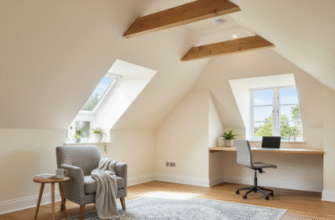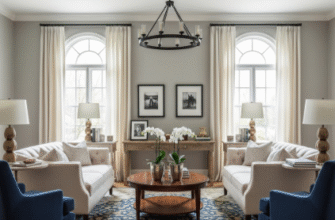
I used to think furniture arrangement was about filling space efficiently, like some kind of domestic Tetris game.
Turns out, the real magic happens when you stop thinking about rooms as containers and start treating them like conversations—literally. The distance between two chairs, roughly 4 to 8 feet depending on who you ask, determines whether people will actually talk or just nod politely across a void. I’ve watched this play out in countless living rooms: push seating too far apart and you get that awkward raised-voice situation where everyone’s half-shouting about the weather. Pull it closer, maybe 5 feet between facing sofas, and suddenly people lean in. They gesture. The whole energy shifts, and honestly, it’s kind of remarkable how a few inches can reconfigure human behavior in such a predictable way.
The Psychological Geography of Angled Seating and Why Corners Matter More Than You’d Think
Here’s the thing: parallel arrangements feel formal, almost confrontational. Two sofas facing each other straight-on? That’s a job interview, not a dinner party. But angle chairs at maybe 30 to 45 degrees and something loosens. Environmental psychologists—yes, that’s a real field—have documented how angled seating reduces perceived pressure in social interactions. It gives people escape routes for their gaze, little breaks from direct eye contact that make conversations flow easier. I guess it makes sense from an evolutionary standpoint, though I’m definitely not qualified to diagnose our ancestors’ seating preferences.
Anchor Points and the Weird Science of Creating Multiple Conversation Zones
Large rooms need what designers call anchor points—a fireplace, a window with a view, sometimes just a really good rug. You build your groupings around these, creating little islands of intimacy within bigger spaces. The average living room can support two, maybe three distinct conversation areas if you’re clever about it. I’ve seen 20-by-20-foot spaces carved into a main seating group (sofa plus two chairs, classic triangle formation) and a secondary reading nook with just two chairs angled toward each other near a window. The key is overlap without crowding: leave roughly 30 inches for walkways between zones, or people will feel trapped. Wait—maybe 36 inches? I’ve heard both numbers from different sources, and honestly the exact measurement probably depends on whether your guests are carrying wine glasses.
The Float Strategy and Why Pushing Everything Against Walls Actually Kills Intimacy Dead
This is where most people mess up.
They inherit this instinct to shove furniture against walls, maximizing floor space like they’re preparing for a dance marathon that will never happen. But floating furniture—pulling it away from walls by even 12 to 18 inches—creates boundaries that paradoxically make rooms feel larger and more intimate simultaneously. It’s counterintuitive until you try it. The space behind a sofa becomes a circulation path, sure, but it also gives the seating group definition, makes it feel intentional rather than desperate. I used to resist this completely, thought it was wasteful and pretentious. Then I helped a friend rearrange her living room, pulled her sectional 2 feet off the wall, added a console table behind it, and the whole room suddenly had structure. People naturally gravitated to the seating area instead of awkwardly hovering near the kitchen.
Coffee tables complicate everything, of course. You want them close enough to recieve a drink without lunging—14 to 18 inches from seating is the standard recommendation—but not so close they become shin-bruising obstacles. Low tables, maybe 16 inches high, work better for deep sofas. Higher ones, up to 20 inches, pair with more upright seating. The proportions matter more than I expected, though I’ll admit I still sometimes just eyeball it and hope for the best.