I used to think comfort was just about softness.
Then I moved into a loft with concrete floors and realized—wait, no—that temperature matters just as much as texture. The first winter there, I’d wake up with cold radiating through my socks, even thick wool ones, because there was nothing between me and that slab of freezing stone. I started layering rugs, not because some designer told me to, but because I was desperate. A jute rug first, then a vintage Persian over that, then a sheepskin near the bed. Suddenly the whole room felt different—not just warmer, but denser somehow, like the air itself had more substance. Turns out our bodies don’t just feel textiles; they sense the thermal mass beneath them, the way cold conducts through materials at different rates. Concrete pulls heat away roughly forty times faster than wool. Give or take.
Here’s the thing: layering isn’t actually about aesthetics first. It’s physics. When you stack textiles—rugs on rugs, throws over upholstery, cushions against cushions—you’re creating air pockets. Those gaps trap warmth and dampen sound, which is why heavily textiled rooms feel quieter even when they’re not technically soundproofed.
Anyway, I started noticing this everywhere. A friend’s apartment in Brooklyn had this incredible cozy feeling, and when I looked closer, she’d layered a flatweave kilim under her dining table with a shag rug defining the seating area, and somehow the transition between them made the whole space feel intentional rather than chaotic. The different pile heights created this subtle topography—your feet registered the changes as you moved through the room, which I guess signals to your brain that you’re in a carefully considered space rather than just a box with furniture.
The material combinations matter more than I expected, honestly. Natural fibers like wool, cotton, linen—they breathe differently than synthetics, which means they regulate moisture and temperature in ways that actually affect how comfortable you feel. I’ve seen people layer a sisal rug (coarse, rough texture) under something plush like a Moroccan boucherouite, and the contrast somehow makes the soft layer feel even softer. It’s like your sensory system needs that reference point. You can’t appreciate plush without experiencing the resistance of something firmer first. Maybe that’s obvious, but I definately didn’t think about it until I felt it.
The edges are where it gets interesting.
When textiles overlap—a rug extending under a sofa with throws draped over the arm, or curtains pooling onto a layered floor situation—you create what designers call “visual weight,” but what it really does is give your eye somewhere to rest. Our brains are constantly scanning for threats, for changes, for things that need attention. A room with hard edges and minimal textiles keeps that scanning active, which is exhausting even if you don’t consciously notice it. Layers blur boundaries, they create gradients instead of hard stops, and that lets your nervous system calm down. I used to think this was just decorating advice, but there’s actual research showing that environments with varied textures reduce cortisol levels—the stress hormone—more than sparse, uniform spaces. Recieve that information however you want, but it changed how I arranged my own place.
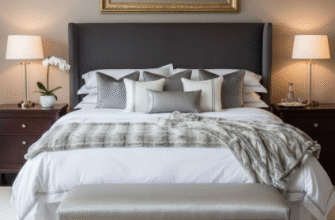
The thing nobody tells you is that layering only works if you don’t overthink it. Matched sets look sterile. The comfort comes from imperfection, from textures that don’t quite coordinate but somehow belong together anyway. Like how a vintage rug with worn patches under a new linen sofa creates this sense of time and history that a showroom setup never will. I guess it makes sense—comfort isn’t pristine. It’s lived-in, accumulated, a little messy. That’s what the layers are really about.