
I used to think symmetry in furniture arrangement was boring—like those magazine spreads where everything matches too perfectly.
But here’s the thing: symmetrical arrangements aren’t about making your living room look like a hotel lobby, they’re about creating a kind of visual anchor that your brain actually craves. When I started paying attention to how people naturally gravitate toward certain seating areas, I noticed they always chose the symmetrical setups first. Turns out there’s something hardwired in us that finds comfort in balance—not the forced kind, but the type that feels intentional without screaming “I tried too hard.” Scientists who study environmental psychology have documented this preference across cultures, though the exact percentages vary depending on who you ask (roughly 60-70% of people, give or take). It’s not universal, obviously, but it’s common enough that designers have been exploiting this tendency for centuries.
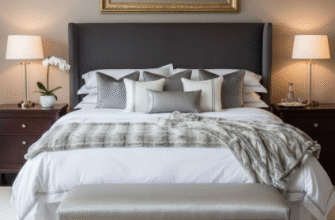
The mirror effect in living rooms works because it creates predictable sight lines. You place a lamp on one side of the sofa, you put its twin on the other side. Two chairs flanking a fireplace. Matching side tables.
Why Your Brain Actually Responds to Mirrored Furniture Placement Patterns
Wait—maybe I’m getting ahead of myself here. The neurological response to symmetry isn’t just aesthetic preference; it’s connected to how our visual cortex processes information more efficiently when patterns repeat. Researchers have found that symmetrical environments can actually reduce cognitive load, meaning your brain doesn’t have to work as hard to make sense of the space. I guess it makes sense when you think about it: if one side of the room mirrors the other, your mind only has to process half the information and then duplicate it. This efficiency translates to a feeling of calm, though some people find it stifling. I’ve seen both reactions in my own living room experiments, which is why I’m not entirely convinced symmetry works for everyone despite what the design blogs say.
The practical side gets messier than theory suggests.
Measuring Your Space Before Committing to Any Symmetrical Layout Decisions
You can’t just eyeball this stuff and hope for the best—I learned that the hard way when I tried to center a console table and ended up three inches off for weeks before I noticed. Measure from architectural features like windows, doorways, or fireplace centers, not from walls, because walls lie. They’re never as straight as you think. Use painters tape on the floor to map out furniture footprints before you start dragging heavy pieces around. This saves your back and your patience. And honestly, sometimes the measurements reveal that perfect symmetry won’t actually work in your space, which is fine—you can create what designers call “visual weight balance” instead, where different objects on each side feel equally substantial even if they don’t match exactly.
Matching pairs dominate traditional symmetrical arrangements but they’re not mandatory.
Selecting Complementary Pieces That Don’t Have to Be Identical Twins
The stricter approach uses identical furniture on both sides: same chairs, same lamps, same everything. But you can achieve balance with complementary pieces that share similar visual weight, height, or color without being clones. Two different armchairs can work if they’re the same height and have comparable mass. A floor lamp on one side can balance a tall plant on the other if both reach similar heights and draw the eye with equal intensity. I’ve noticed this looser interpretation feels more collected and less staged, though it requires better instincts—or more trial and error—to pull off successfully. Some interior designers swear by the identical approach for formal rooms and the complementary method for casual spaces, but I’ve seen enough exceptions to know those aren’t hard rules.
Common Mistakes That Destroy Balance Even When Everything Technically Matches
Anyway, even perfect symmetry can fail if you ignore scale. Tiny matching lamps on a massive sofa look ridiculous—the proportions fight each other. Similarly, pushing everything against the walls creates symmetry but kills intimacy; you need to pull furniture away from perimeters to create conversation zones that feel balanced and functional. Another issue: overcrowding. Just because you can mirror six items on each side doesn’t mean you should. Sometimes less is more, as the saying goes, though I find that advice irritatingly vague when you’re actually trying to furnish a room. And lighting—you can arrange furniture symmetrically all day, but if your lighting is lopsided, the whole thing falls apart because our eyes follow light first and furniture second.
Breaking Symmetry Intentionally Without Making the Whole Room Feel Chaotic
Once you’ve established a symmetrical foundation, you can definately break it with accessories—that’s where personality enters. A stack of books on one side table but not the other. An asymmetrical art arrangement above a symmetrically placed credenza. This layering keeps the room from feeling too rigid while maintaining the underlying calm that symmetry provides. I used to think you had to choose between symmetry and character, but turns out you can have both if you’re strategic about where you introduce irregularity. The key is keeping major furniture pieces in balanced positions while letting smaller decorative elements be more spontaneous. Though honestly, some days I wonder if we overthink all of this—maybe people just like rooms that don’t give them visual anxiety, however you achieve that.