Open floor plans were supposed to fix everything.
I remember the first time I walked into one of those gut-renovated brownstones in Brooklyn—probably 2014, maybe 2015—where they’d knocked down every wall between the kitchen and living room and dining area, and I thought, wow, this is it, this is how people should live. The light poured in from windows that suddenly seemed to matter more. You could see your kids doing homework while you chopped vegetables. Dinner parties felt less like you were exiled to the kitchen while everyone else had fun. The whole concept felt democratic, somehow, like architecture had finally caught up with how we actually wanted to exist in our homes. Except here’s the thing: about six months into the pandemic, everyone I knew with an open concept layout was losing their minds.
Turns out humans need doors. We need corners. We need the ability to disappear from each other without actually leaving the house.
The backlash was swift and a little embarrassing for those of us who’d championed the open plan. Architects started talking about “broken plan” designs—which sounds like something went wrong but actually means intentional interruptions in sightlines. Half-walls. Partial dividers. Strategic furniture placement that creates zones without the commitment of actual construction. I’ve seen people spend thousands on fancy room dividers from West Elm, trying to un-do what they paid contractors to demolish five years earlier, which would be funny if it weren’t so depressing.
The Psychological Geography of Walls (and the Spaces Between Them)
There’s fasinating research—I think it came out of Cornell, or maybe it was Michigan—about how physical boundaries affect our sense of psychological safety. The study followed something like 200 families over eighteen months, give or take, and found that people in completely open homes reported higher stress levels and worse sleep quality. They couldn’t mentally “leave” work because there was no physical threshold to cross. Arguments escalated faster because there was nowhere to cool down. Kids had trouble focusing on homework.
Wait—maybe that’s obvious?
But the researchers also found that homes with too many closed-off rooms created isolation. People stopped interacting spontaneously. Families fragmented into their separate zones and basically became roommates. So the sweet spot, turns out, is this weird middle ground that’s actually kind of hard to achieve: visibility with escape routes. Connection with the option for solitude. You want to see the people you live with, apparently, but you also need to be able to not see them, and that contradiction is what makes residential design so maddeningly difficult.
I used to think this was just a modern problem—that previous generations had it figured out with their formal dining rooms and parlors and studies. But then I started looking at historical floor plans, and honestly, those houses had the opposite issue. Everything was so segmented that you needed servants to communicate between rooms. The kitchen was basically in a different building. Which worked fine if you had staff, but most of us don’t.
Practical Solutions That Don’t Require Demolition or a Architecture Degree
The simplest fix I’ve seen is what designers call “implied separation”—using different flooring materials, or a slight level change, or even just paint color to signal that you’re entering a new zone. Your brain registers the transition even though there’s no physical barrier. A friend of mine put down a vintage rug to define her living area within a larger open space, and it genuinely changed how the room felt. Suddenly the couch arrangement made sense. People naturally gathered there instead of wandering around uncertain where to sit.
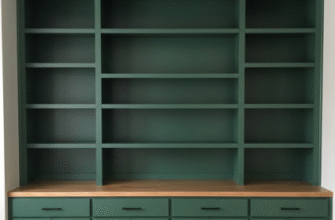
Furniture can do the work walls used to do. A bookshelf perpendicular to a wall creates a room divider without blocking light. A console table behind a sofa establishes a boundary between living and dining areas. I guess it makes sense that in an era when we can’t afford to build more walls—both literally, because construction is expensive, and philosophically, because we still like the openness—we’d figure out how to use objects as architecture.
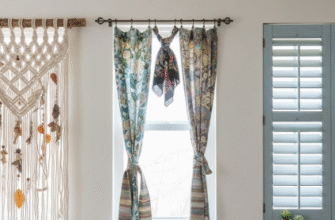
Curtains are having a moment too, which feels very Victorian but also practical. Floor-to-ceiling curtains on a track system let you reconfigure space whenever you need privacy. Close them for a Zoom call, open them for a dinner party. The flexibility is the point. Some people are installing sliding barn doors or Japanese-style shoji screens, which accomplish the same thing with more permanance but less committment than drywall.
The more I think about it, the more this whole debate feels like it’s about control. Open concept spaces feel liberating until they feel invasive. Defined rooms feel cozy until they feel claustrophobic. What we actually want—what we’ve always wanted, probably—is the ability to adjust our environment to match our mood, our needs, the specific people we’re living with at any given moment. Which is why the best solution isn’t purely open or purely closed, but something adaptable.
Anyway, that’s where I’ve landed.