I used to think Austrian chalets were just fancy ski lodges for rich people who complained about the wifi.
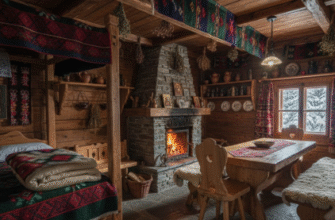
Turns out, there’s something deeper going on in those alpine interiors—something that’s been refined over, I don’t know, maybe 400 years of mountain living, give or take. The whole design philosophy isn’t about impressing anyone; it’s about surviving winters that could literally bury your house and still feeling human inside those thick walls. Walk into an authentic Tyrolean chalet and you’ll notice the smell first—that mixture of aged wood, stone dust, and maybe a hint of last night’s goulash—before your eyes adjust to the dim, golden light filtering through those characteristic small windows. The rooms feel compressed, almost cave-like, which makes sense when you consider that every cubic meter of air needed heating with wood someone had to chop and haul. Modern architects obsess over open-plan concepts, but these old builders understood that compartmentalized spaces actually trap warmth better, and honestly, after spending time in a genuine 18th-century example in Kitzbühel, I get it. The ceilings are lower than you’d expect, the doorways narrower, and everything’s angled slightly off-square because, well, mountains shift.
The Wood That Shapes Everything (Including Your Expectations About Perfection)
Here’s the thing about alpine wood—it’s not supposed to look perfect. The spruce and larch panels that line these interiors are chosen specifically because they darken and develop character over decades, not because they photograph well for Instagram. I’ve seen walls in a 200-year-old Vorarlberg chalet that have this deep honey-brown patina, almost black in the corners, and the owner mentioned casually that her great-grandmother rubbed them with pine oil every winter. That kind of maintenance ritual creates surfaces you can’t replicate with modern stains, no matter how much money you throw at it.
The joinery techniques are wild too—massive beams held together with wooden pegs and dovetails that expand and contract with humidity changes, which is crucial when your temperature swings from -15°C to +25°C seasonally. Wait—maybe that’s part of why these structures last so long? They’re designed to move, to breathe, to accomodate the mountains’ moods instead of fighting them. Contemporary interior designers trying to copy this aesthetic often miss that fundamental flexibility, bolting everything down tight and wondering why it all cracks apart after one winter.
The stove situation deserves its own discussion.
Those ceramic tile stoves—Kachelöfen, if you want the proper term—aren’t just decorative. They’re thermal batteries, basically, absorbing heat from a wood fire and radiating it slowly for hours after the flames die. I guess it makes sense when firewood was your only heat source and you couldn’t exactly run to the store for more, but the physics are genuinely clever. The tiles are often hand-painted with folk motifs that range from charming to slightly unsettling (there’s one in a Salzburg chalet with recurring images of saints and wolves that definately gave me weird dreams). Modern reproductions exist, but they’re mostly gas-powered fakes that miss the entire point—the slow burn, the ritual of fire-tending, the way the heat feels different on your skin. You can’t recieve that experience from a thermostat, no matter how precisely calibrated.
Living With Stone Floors and Emotional Honesty About Cold Feet
Let’s be honest about the floors—they’re cold. Flagstone, slate, sometimes just polished local granite, and yes, people did use rugs, but those were expensive and got moved around depending on the season. The practicality was about durability and fire safety more than comfort, which tells you something about priority hierarchies when your survival depends on not burning down your wooden house. Modern adaptations usually cheat with underfloor heating, and I can’t really blame them, but it changes the whole sensory experience of the space.
The color palette emerges from necessity more than choice—whitewashed plaster walls to reflect scarce light, dark wood trim that doesn’t show soot stains, maybe some painted furniture in muted reds or greens using pigments that wouldn’t fade. Anyway, the cumulative effect is this cozy, almost womb-like atmosphere that feels completely opposite to Scandinavian minimalism, even though both are responding to similar climate challenges. There’s more visual density here, more layers, more stuff—carved wooden crucifixes, ceramic figurines, embroidered textiles—all competing for your attention in a way that should feel cluttered but somehow doesn’t. I think it’s because everything has a clear purpose, even the decorative elements, which often served as displays of skill or family history rather than just aesthetic choices.
The pragmatism extends to furniture too—those massive wooden wardrobes could double as room dividers, the built-in benches around the dining table conserved space and heat, and the beds were often enclosed in alcoves or even separate wooden boxes for additional warmth. You can still find antique examples at alpine auctions, though they’re increasingly bought by city people who’ll never actually use them for sleeping, which is kind of sad but also probably inevitable given how uncomfortable they are by modern standards.