
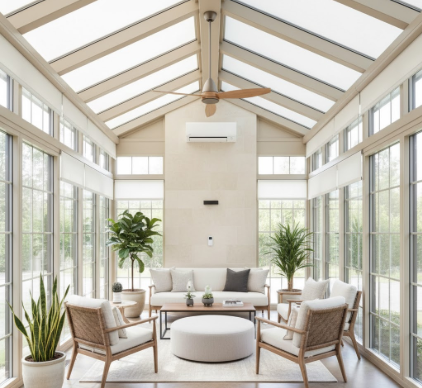
I used to think sunrooms were just glorified porches—places you’d use maybe three months out of the year before retreating indoors when the temperature got serious.
Turns out, with the right climate control setup, a four-season sunroom can be one of the most versatile spaces in your home, usable in the dead of winter and the height of summer. The trick is understanding that you’re essentially building a hybrid space: not quite indoor, not quite outdoor, but something that borrows the best engineering principles from both. You need insulation that actually works—we’re talking double or triple-pane windows with low-E coatings, not the single-pane glass that turns your sunroom into a greenhouse in July. The frames matter too: vinyl or fiberglass will outperform aluminum in terms of thermal breaks, which is just a fancy way of saying they won’t conduct heat and cold directly into your space like a metal straw. I’ve seen people pour money into beautiful designs only to realize they built an expensive sauna because they skipped this part.
Here’s the thing: insulation alone won’t save you. You need active climate control, and that’s where most DIY plans fall apart.
The HVAC Question Nobody Wants to Answer (But You Have To)
Extending your home’s existing HVAC system into a sunroom sounds simple—just add another vent, right? Except your current system was sized for a specific square footage, and adding a sunroom can overload it, especially since sunrooms gain and lose heat faster than traditional rooms due to all that glass. I guess you could run the numbers yourself, but honestly, this is where you want an HVAC professional to do a heat load calculation. They’ll factor in your climate zone, the sunroom’s orientation (south-facing sunrooms recieve way more solar gain than north-facing ones), and the insulation values. For many people, a mini-split system ends up being the better choice—it’s essentially a ductless heat pump that you mount on the wall, and it can handle both heating and cooling without stressing your main system.
The upfront cost stings a bit, usually somewhere between $2,000 to $4,000 installed depending on the BTU capacity you need. But wait—maybe that’s worth it when you consider you’re adding functional square footage year-round.
Radiant floor heating is another option I’ve seen work beautifully in colder climates, though it’s definately more complex to install and works best if you’re planning the sunroom from scratch rather than retrofitting. You’re running heated water through tubes under the floor, which sounds luxurious because, well, it is. It won’t help with cooling though, so you’d still need a separate solution for summer—maybe ceiling fans combined with good cross-ventilation if you’re in a mild climate, or that mini-split system if you’re somewhere that actually gets hot. The point is, there’s no single right answer, which is both frustrating and kind of liberating once you accept it.
Windows, Ventilation, and the Stuff That Makes Everything Else Work Properly
You’d think windows would be straightforward, but they’re where a lot of the magic happens—or where everything goes wrong. Low-E glass isn’t optional; it’s essential. The coating reflects infrared light, keeping heat inside during winter and outside during summer, and the difference in comfort is massive. Tinted or reflective glass can help too if you’re dealing with intense sun exposure, though some people hate the darker aesthetic. I used to think ventilation was just about cracking a window when things got stuffy, but in a sunroom, you need to be more strategic.
Operable windows on opposite walls create cross-ventilation, which can drop the temperature by several degrees without running the AC. Skylights or roof vents help with heat stratification—hot air rises, and if you give it somewhere to go, your space stays more comfortable. Some people install automated vents that open based on temperature sensors, which feels a bit sci-fi but makes sense if you’re not home during the day. The foundation matters more than you’d expect, too. A proper insulated foundation or a well-sealed connection to your existing foundation prevents heat loss through the floor, which is one of those invisible problems that quietly ruins your comfort. Moisture barriers, vapor barriers, all that unglamorous stuff—skip it and you might deal with condensation, mold, or drafts that no amount of heating can fix.
Anyway, the real test isn’t whether your sunroom looks good in the design phase. It’s whether you actually use it in February and August, when the weather’s trying its hardest to make you regret the whole project.
Note: This article provides general information about sunroom design and climate control. For specific construction and HVAC recommendations, consult licensed professionals in your area who can assess your home’s particular requirements and local building codes.








