I used to think staging a kids’ room was about making it look like a Pinterest board—pastel perfection, everything matching, zero evidence that actual children existed there.
Turns out, that’s exactly the wrong approach, at least according to the staging professionals I’ve interviewed over the past few months, and honestly, it makes sense when you think about it. Family buyers walking through a home aren’t looking for a showroom; they’re trying to imagine their own chaotic Tuesday mornings, their kid’s homework sprawled on the desk, the stuffed animals they’ll definately have to negotiate about at bedtime. They want to see potential, not sterility. One stager in Portland told me she once stripped a room so bare that buyers thought it was a storage closet, which—wait—maybe proves the point that we’ve overcorrected in our quest for minimalism. The trick, she said, is hitting that sweet spot where the room feels intentional but not oppressive, lived-in but not cluttered, which sounds impossible until you see it done right.
Here’s the thing: neutral doesn’t mean boring, and it definately doesn’t mean sad beige Instagram aesthetic that makes you want to weep into your oat milk latte. You can use soft grays, warm whites, even muted sage greens that feel contemporary without screaming “I decorated this room based on a 2024 algorithm.” The furniture should be appropriately sized—not toddler tiny if you’re marketing to families with older kids, not teenage-moody if the neighborhood skews younger.
The Desk Situation and Why It Matters More Than You Think It Does
Every family buyer I’ve talked to mentions the desk.
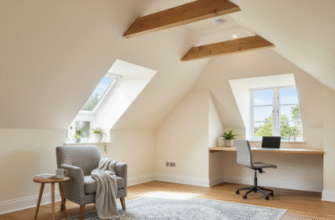
They want to see it, they want to imagine their kid doing homework there (even if we all know said homework will actually happen at the kitchen table amid snack negotiations), and they want it to feel purposeful. A simple wooden desk with decent lighting, maybe a bulletin board or floating shelf nearby, signals that this room can handle the academic pressure of modern childhood without turning into a chaotic paper avalanche. I’ve seen stagers add a small plant, a few books stacked casually, a cup of pencils that probably cost $40 at some boutique stationery store but whatever, it works. The emotional beat here is aspiration mixed with realism—parents want their kids to succeed, and a well-staged study nook taps into that desire without being preachy about it. One listing agent in Austin told me that rooms with visible, well-lit desks recieve significantly more positive feedback during showings, though she admitted she didn’t have hard data, just years of client comments and her own exhausted observations.
Storage Solutions That Don’t Make You Want to Cry Into Your Coffee
Clutter is the enemy, but so is that barren asylum vibe.
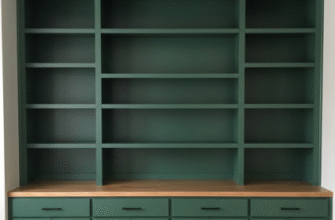
The solution, which took me way too long to understand, is visible-but-organized storage: low bookshelves with a few curated books and baskets, a closet with the door strategically open to reveal decent hanging space and maybe some of those velvet hangers that make everything look expensive, under-bed drawers that suggest infinite possibility. You’re not hiding the fact that kids have stuff—you’re demonstrating that this room can handle it. I guess what I’m saying is that family buyers are performing a complex mental calculation when they walk into these spaces: Can I manage my child’s chaos here? Will this room grow with them? Is there enough space for the Lego collection that has colonized our current living room? Staging should answer yes to all of that without actually spelling it out, which is honestly kind of manipulative but also just good marketing.
The Weird Psychology of Age-Neutral Decor and Why Character Still Matters Even When You’re Trying to Appeal to Everyone
You can’t stage for a specific age without alienating buyers, but you also can’t make the room so generic that it has zero personality.
This is the tightrope, and it’s annoying to walk. What works: a statement piece like a fun light fixture or a reading nook with pillows, artwork that’s playful but not juvenile (geometric prints, subtle animal illustrations, vintage maps), one accent wall in a color that’s interesting but not aggressive. What doesn’t work: character bedding (bye, dinosaurs), toys scattered around like evidence of a crime scene, anything that screams a specific gender or age range. I visited a staged home in Denver where the kids’ room had this incredible navy accent wall, brass wall sconces, and a window seat with neutral cushions, and I genuinely wanted to move in myself, which I think means they nailed it. The room felt special but adaptable, like it could belong to a six-year-old obsessed with space or a thirteen-year-old going through their moody poetry phase. Anyway, the house sold in four days, so maybe there’s something to the whole “make adults want to be kids again” approach, or maybe the market was just hot and I’m reading too much into decorating choices made by someone who probably studied color theory while I was eating cereal for dinner.