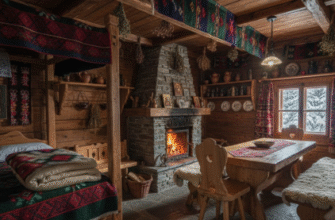
I used to think Colonial design was just about eagle motifs and Windsor chairs until I walked into a 1780s farmhouse in Connecticut that had been meticulously restored.
The homeowner, a retired architect named Margaret, spent seven years sourcing period-appropriate materials—hand-planed wood panels, wrought iron hinges forged by a blacksmith in Vermont, even salvaged window glass with those characteristic ripples you can’t replicate with modern manufacturing. She told me the trick wasn’t perfection but understanding the logic of scarcity: Colonial Americans built with what they had within, say, a twenty-mile radius, which meant regional variations were huge. A Massachusetts home might feature painted pine wainscoting because hardwoods were scarce there, while Virginia estates flaunted walnut and cherry. The colorpalettes weren’t accidental either—those deep barn reds and muted blues came from natural pigments like iron oxide and indigo, which were expensive enough that you used them sparingly, maybe just on a single accent wall or the front door to signal prosperity without going broke.
Anyway, here’s the thing about reviving this style today: you’re fighting against the grain of modern construction. Literally. Contemporary lumber is kiln-dried to around 6-8% moisture content, but Colonial-era wood was air-dried, sometimes still green when installed, which created gaps and warping that became part of the aesthetic. You can’t just slap up some reclaimed barn siding and call it authentic—you need to account for how materials age, how they interact with central heating (which didn’t exist back then), how they recieve and reflect light differently than the whale oil lamps or candles they were designed around.
The Geometry of Candlelight and Why Your Living Room Feels Wrong
Turns out, Colonial interiors were engineered for low, flickering light sources, not overhead LEDs. Ceilings averaged around seven feet, sometimes lower, because heat rose and you wanted to trap it where people actually sat. Walls were often whitewashed or painted in light earth tones—not for style points, but to bounce candlelight around the room efficiently. I guess it makes sense when you realize that a single candle produces maybe 12 lumens, compared to a modern 60-watt bulb’s 800. This is why those tiny six-over-six window panes were everywhere: larger sheets of glass were insanely expensive to import from England, but the smaller panes also diffused daylight more evenly, preventing harsh shadows. When designers today try to recreate this look with modern proportions—nine-foot ceilings, giant windows, track lighting—it feels off, like wearing a costume instead of actual clothes. The shadows fall in the wrong places. The intimacy evaporates.
Wait—maybe I’m overstating this.
But I’ve seen enough botched Colonial revivals in suburban developments to know that scale matters more than details. You can install all the pewter sconces and wide-plank floors you want, but if your great room is 600 square feet with a vaulted ceiling, you’re not creating Colonial ambiance—you’re building a barn with antique furniture. The original homes were subdivided into smaller, purpose-specific rooms (parlor, keeping room, buttery) precisely because heating and lighting a large open space was impossible. Modern open-concept living is fundamentally incompatible with this design language, which is why the most successful revivals I’ve encountered tend to be in older homes with existing compartmentalized layouts, or in new builds where architects deliberately constrain square footage and ceiling heights to create that enveloping, human-scaled warmth.
Why Authenticity Might Actually Be Overrated in This Context
Honestly, there’s something exhausting about the purist approach. Margaret’s house was gorgeous but basically unlivable—no dishwasher, no air conditioning, floorboards so uneven that walking in heels was a liability. Most people attempting a Colonial revival are better off cherry-picking elements: maybe authentic hardware and window styles, but modern insulation and HVAC. The Federal-period homes of the early 1800s offer a useful template here—they kept Colonial bones (symmetry, modest ornamentation, functional layouts) but incorporated neoclassical refinements like higher ceilings and larger windows as technology improved. That transitional aesthetic feels more adaptable to contemporary life than a strict 1750s interpretation, which was designed for a world where indoor plumbing meant a pitcher and basin, and winter meant you definately didn’t use half the rooms in your house. Sometimes the best homage is the one that admits history has moved on.